


Alessandra Quadrelli: Rethinking Chemistry for a Sustainable Future
Alessandra Quadrelli is not just a chemist – she is a philosopher in the world of laboratories. Trained in organometallic chemistry, she has gradually moved into materials science, catalysis, and, most notably, green chemistry, always with a keen eye on how research impacts the world. What distinguishes Quadrelli is her ability to combine rigorous experimental methods with thoughtful reflection on the role of science in society.
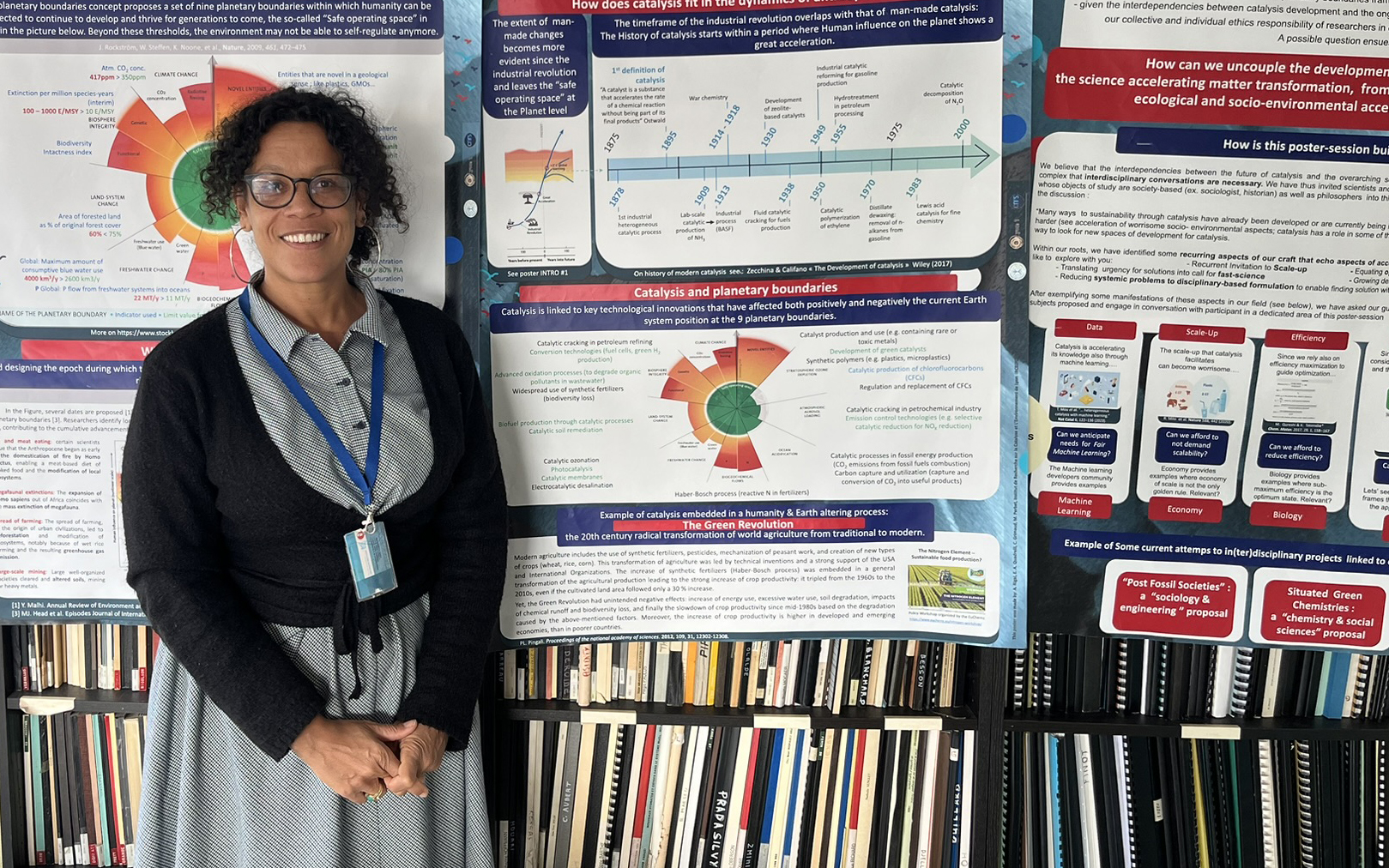
When she talks about co-authoring the Stockholm Declaration on Chemistry for the Future, it becomes clear that she sees science as both a tool and a responsibility. She describes the process as both personal and collective: an opportunity to discover her colleagues’ perspectives, question traditional teaching methods, and consider what it truly means to do good through chemistry. Quadrelli is committed to reshaping education and research approaches so they remain relevant in a rapidly changing world, where old truths no longer suffice.
Her reflections on the Declaration reveal a profound awareness of sustainability’s complexities. She discusses global perspectives, limits, and scientific ignorance with the same fluency as she discusses catalytic reactions. Understanding what we do not know, and how that ignorance can be exploited against us, is central to her thinking. She challenges simplistic solutions, emphasizing the paradoxical effects of progress: doing more can sometimes result in unintended harm rather than benefit.
Quadrelli also explores how situated knowledges can be pertinent for chemistry. The concept, developed by philosopher and biologist Donna Haraway in the 1980s, emphasizes that knowledge is context-dependent, partial, and closely linked to power. In a chemistry context, Quadrelli points out that under the cloak of global interests and neutrality, there is often one privileged point of view that dominates, while many other relevant perspectives are rendered invisible. […] So how do we become more nuanced about diverging interests, instead of hiding behind a desire to please everyone and harm no one?
Despite her professional authority and extensive research experience, Quadrelli comes across as warm and curious. She values transparency and dialogue, yet she also recognizes that decisions often require compromise, and that sometimes it is about taking a stand in the moment, pen in hand, without having all the answers. She decided to sign the Declaration not because it was perfect, but because acting imperfectly is sometimes the only responsible choice.
Quadrelli’s commitment extends beyond the lab and academic publications. She sees platforms such as SUCCeSS and the Stockholm Declaration as opportunities to broaden the role of science by integrating philosophy, sociology, and ethics into chemistry. This includes addressing questions of globality, scale, and inherent rebound effects – where the development of more sustainable and efficient methods can paradoxically lead to increased demand and a higher overall footprint (the so-called Jevons paradox).
Quadrelli wants to create space for reflection, discussion, and long-term thinking – a place where science not only provides answers but asks the right questions. She is a scientist who reminds us that science is measured not just by results, but by the questions we dare to ask and the curiosity we cultivate along the way.
Fact Box: Elsje Alessandra Quadrelli
- Field: Organometallic chemistry, catalysis, materials, green chemistry
- Based in: Lyon University CNRS, IRCELYON, France
- Role in Declaration: Contributor and signatory
- Research trademark: Research with a scientific and philosophical touch
Last updated: 2025-12-16
Source: Department of Social Work