


Students simulate global biodiversity negotiations
“This was indeed the most terrific and rewarding experience of this programme,” says LL.M. student José Augusto Fermín. He and his classmates recently took part in an advanced mock negotiation as part of the LL.M. in Environmental Law.
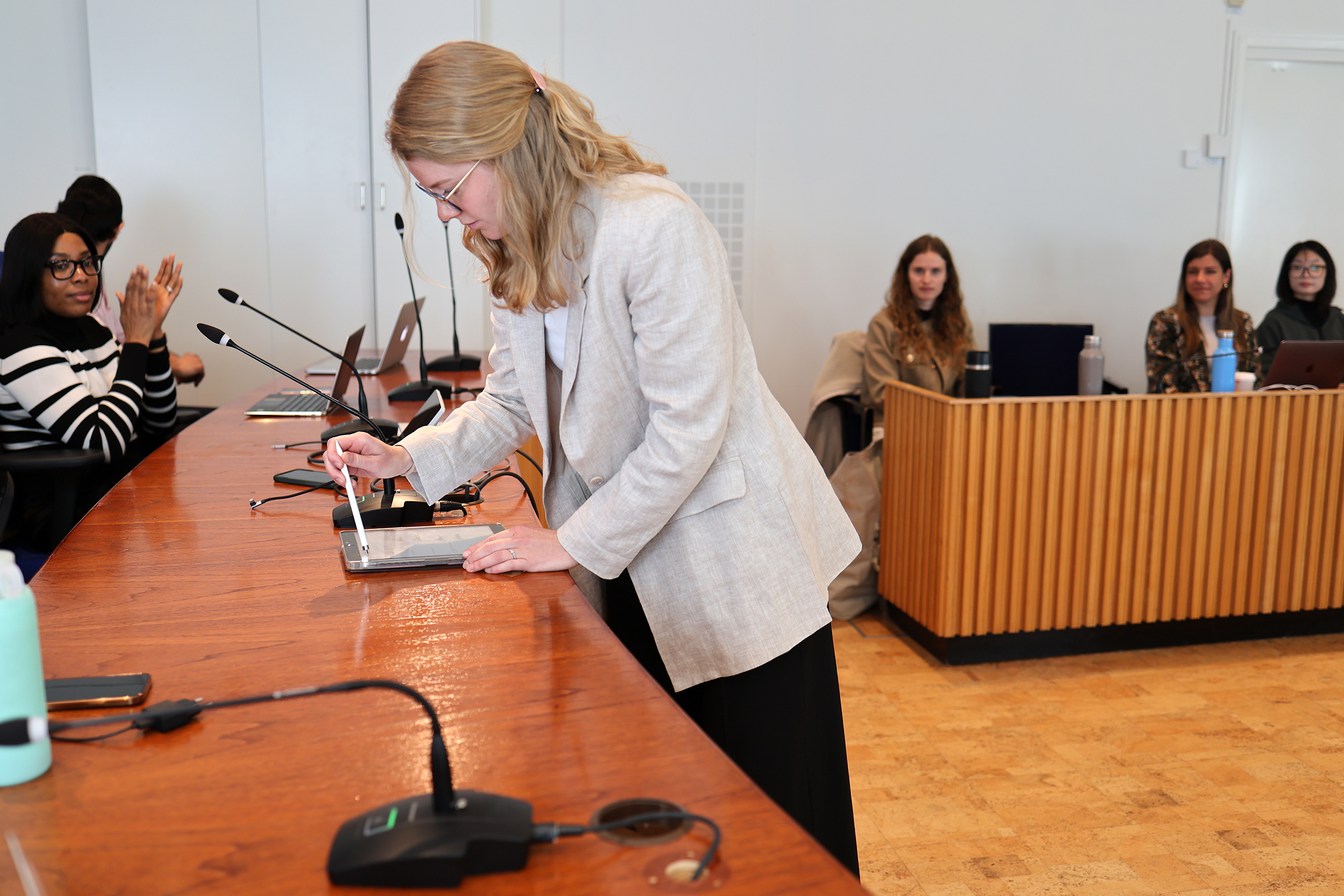
A participant signs a draft protocol during a mock negotiation exercise on global biodiversity governance. Photo: Natalie Oliwsson / Stockholm University
Students in the Master Programme in Environmental Law at Stockholm University recently took part in an advanced mock negotiation exercise in international environmental law. Acting as state delegations and non-state actors, they negotiated and adopted a draft protocol on biodiversity protection during a final conference held at Stockholm University on 7 May.
The mock negotiation formed part of the course Methods, Theories and Practices in Environmental Law, within the LL.M. programme Transboundary Environmental Law. The exercise was designed to simulate multilateral environmental negotiations under the Convention on Biological Diversity (CBD) and the Kunming–Montreal Global Biodiversity Framework.
The aim was to draft and adopt a legally binding international protocol to further implement global biodiversity commitments, alongside existing agreements such as the Cartagena Protocol and the Nagoya Protocol.
Learning through practice
“It is a core idea of the programme that students should develop not only their knowledge of environmental law in transboundary contexts and their methodological and theoretical skills. They must also learn how to use and apply their knowledge in practice,” says Jonas Ebbesson, Professor of Environmental Law and Director of the Master Programme.
“That is why the programme includes both a mock trial during the autumn semester and this comprehensive mock negotiation in the spring. And the students have done a great job.”
Bridging legal knowledge and negotiation practice
Throughout the exercise, students represented different states and stakeholder groups, negotiated treaty provisions and balanced competing legal, political and environmental interests. The simulation gave students the opportunity to apply international environmental law in a realistic diplomatic setting.
“It has been a privilege to witness how the students have developed during this process,” says Anna Christiernsson, Associate Professor of Environmental Law. She has been responsible for the mock negotiation exercise and also teaches on the master programme.
“They have demonstrated great competences and skills in not only applying their knowledge on international environmental law, but also understanding negotiation dynamics in multilateral contexts, legal reasoning and diplomacy, the balancing of interests and the taking into account of specific concerns and interests of the different categories of states and non-state actors.”
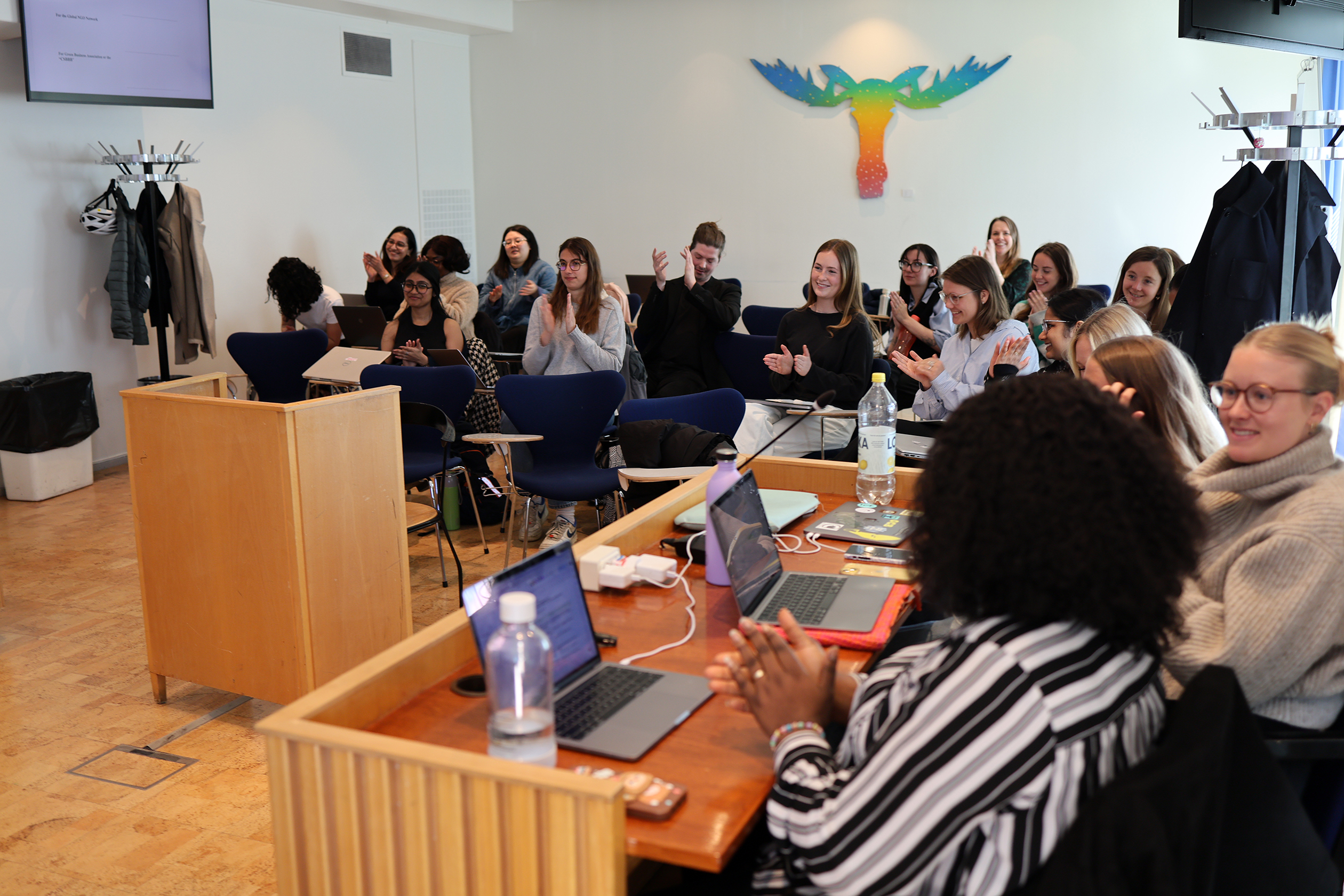
Photo: Natalie Oliwsson / Stockholm University
An insightful academic experience
One of the students participating in the exercise was José Augusto Fermín, who served as part of the co-chairing group responsible for leading the negotiations.
“Personally, I really enjoyed working with our colleagues as the chairing group because it was such an insightful academic experience,” he says.
“One of my key takeaways was the importance of effective communication and coordination within a team in order to distribute responsibilities and achieve common objectives in a negotiation process.”
He also highlights the collaborative spirit among the students throughout the exercise.
“We faced the challenge of guiding the negotiation process towards a successful agreement while balancing our other academic responsibilities. What made the experience so rewarding was the strong engagement and proactive participation of all classmates.”
Experiencing diplomacy in practice
It is one thing to understand international environmental treaties in theory, but another to actually implement them.
– L.L.M student Dilara Akbulut about the experience.
Student Dilara Akbulut represented the European Union delegation during the negotiations. She describes the exercise as both demanding and highly rewarding.
“Taking part in this mock negotiation made the practical application of environmental law much more tangible and showed us how much we have learned throughout the programme”, she says.
According to Dilara, the negotiations also offered important insights into how diplomacy and compromise function in practice.
“It was very interesting to see how different delegations approached the same issues from fundamentally different perspectives, such as development priorities, capabilities and historical responsibility. The exercise showed that environmental protection is not only a legal or technical issue, but also a political one.”
She also emphasises the collective commitment of the students involved.
“I was blown away by how seriously everyone took their roles. From the delegations to the co-chairing group, everybody worked incredibly hard to achieve their goals. That is what made the entire experience both successful and fun.”
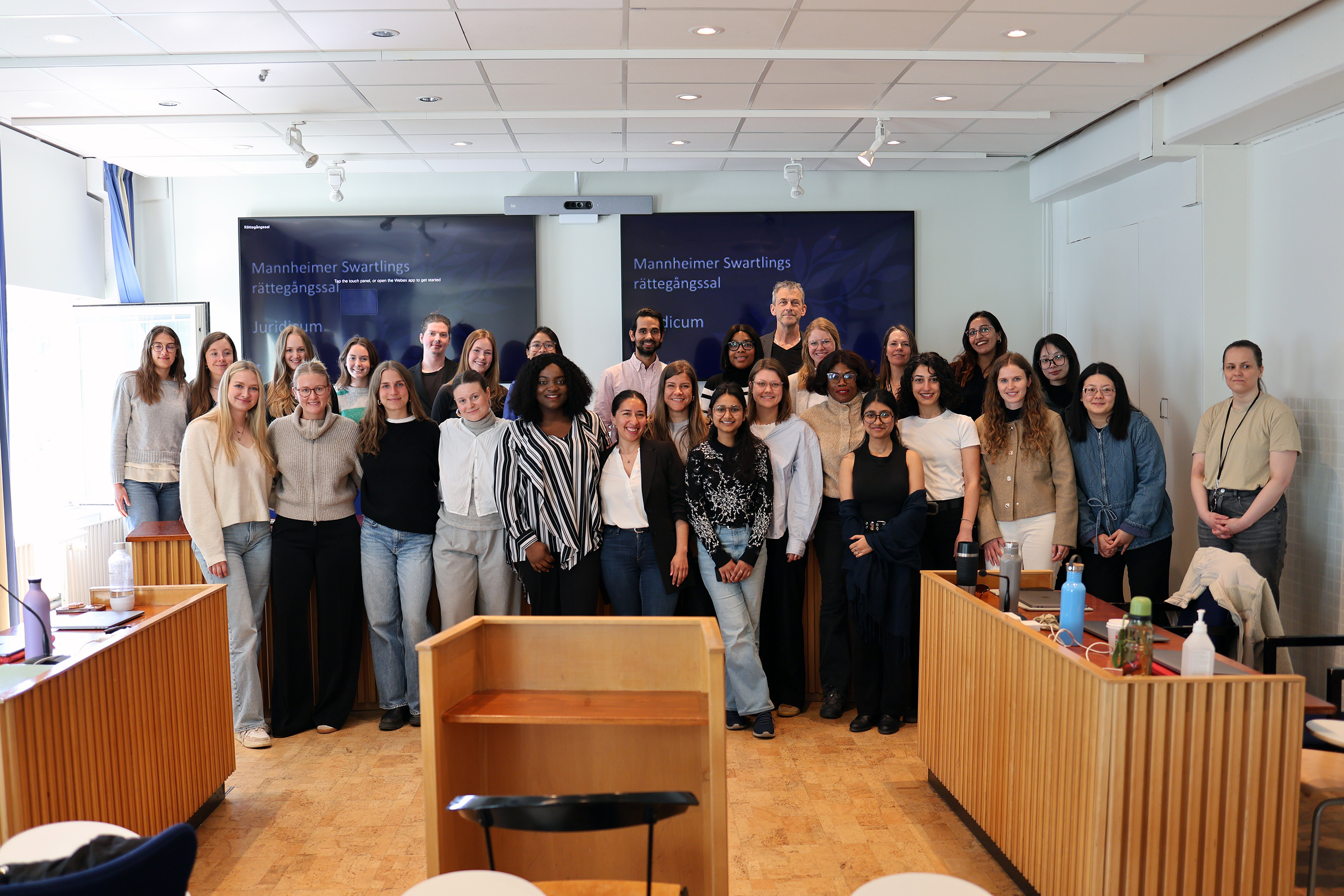
Students in the Master Programme in Environmental Law. Photo: Natalie Oliwsson / Stockholm University
Environmental law in a transboundary context
The Master Programme in Environmental Law at Stockholm University provides students with advanced legal, methodological and practical skills for addressing environmental challenges in transboundary contexts. The programme combines theoretical foundations with applied perspectives on international and comparative environmental law.
As illustrated by the recent mock negotiation exercise, this integration of theory and practice is a central element of the learning experience and is highly appreciated by students on the programme.
Last updated: 2026-05-18
Source: Stockholm Environmental Law and Policy Centre