


Students Taking the Climate Fight to the World’s Highest Court
When Belyndar M. Rikimani from Pacific Islands Students Fighting Climate Change (PISFCC) visited Stockholm University on 2 December, the message was clear: commitment can move mountains – and shape international law.
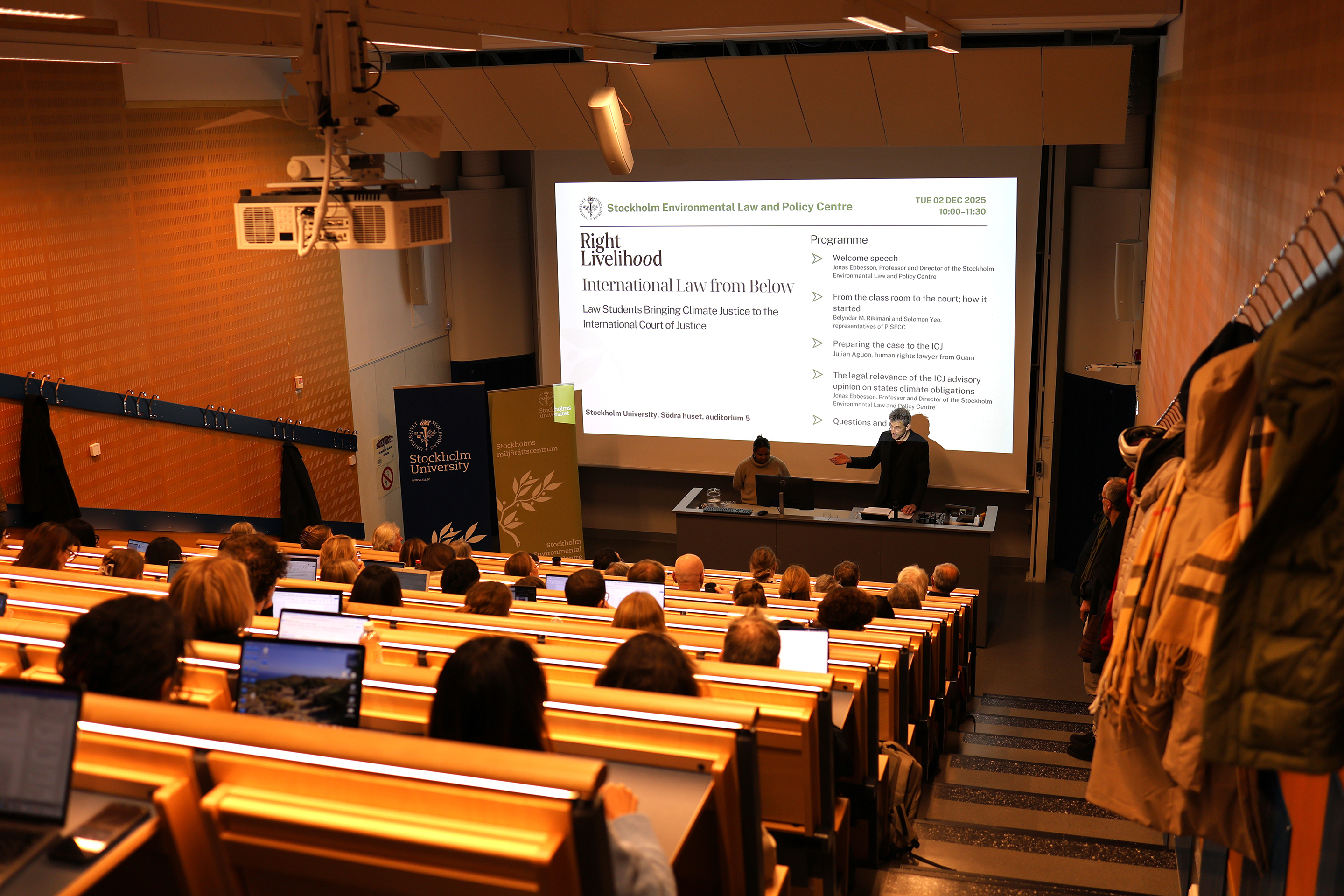
Students, researchers, and representatives from Swedish environmental organisations gathered to attend the seminar, which was organised by the Stockholm Environmental Law Centre in collaboration with Right Livelihood. Photo: Natalie Oliwsson
Belyndar M. Rikimani represents Pacific Islands Students Fighting Climate Change (PISFCC), the youth-led movement founded in 2019 by 27 law students in Vanuatu.
In a lecture hall at Stockholm University, she explained for a large audience of students, scholars, and representatives from Swedish environmental organizations how the climate crisis has never been a distant future threat for them. In the Pacific, it manifests as rising sea levels eroding coastlines, saltwater contaminating crops, and recurrent flooding threatening both livelihoods and cultural survival.
What began as a classroom initiative quickly grew far beyond campus. The students mobilized civil society, engaged decision-makers, and garnered support from over 1,500 organizations and more than 100 states. Despite frequent skepticism, they persevered, driven by a clear goal: to have the International Court of Justice (ICJ) clarify states’ legal obligations to protect the climate and uphold human rights.
We were often told: ‘Are you crazy?’
Belyndar M. Rikimani on the skepticism the students faced in the early days
A Historic Victory in The Hague
In April 2024, the oral proceedings were held in The Hague – a milestone for the entire movement. For Rikimani and her colleagues, it was an emotional moment.
The following year, in July 2025, a historic message was announced: the ICJ clarified that states have binding legal obligations to prevent climate-related harm, protect human rights, and provide full reparation for climate-related losses. The ruling has been hailed as a turning point in international environmental law.
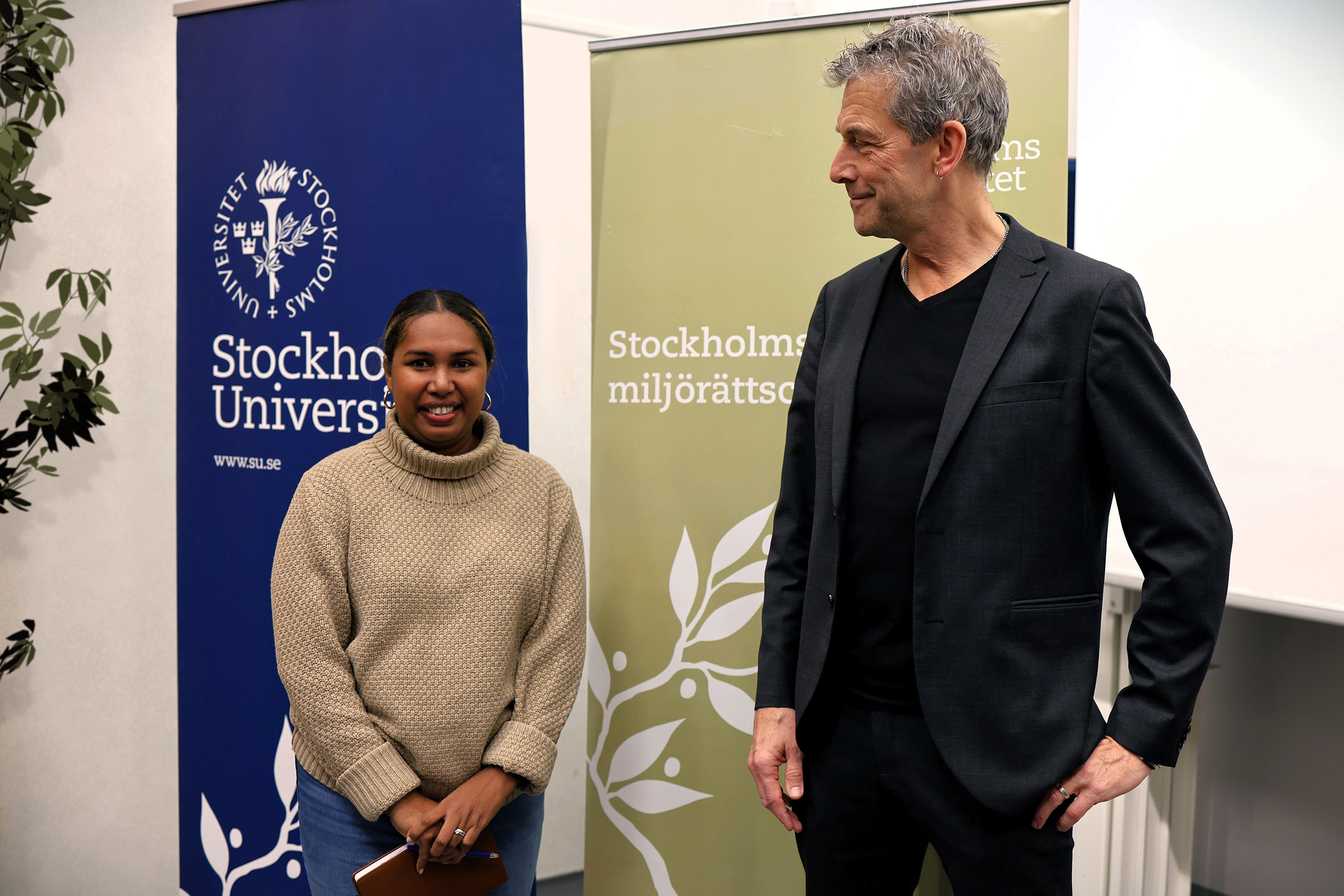
Belyndar M. Rikimani and Professor Jonas Ebbesson, and Director of the Stockholm Centre for Environmental Law. Photo: Natalie Oliwsson
Jonas Ebbesson, Professor of Environmental Law and Director of the Stockholm Centre for Environmental Law at Stockholm University, co-organized the seminar with the Right Livelihood organization and delivered a presentation on the significance of the ICJ advisory opinion and its legal implications for states’ climate obligations:
“The ICJ advisory opinion on states’ climate obligations is not at all surprising, but still a welcome and bold confirmation of states’ obligation to prevent and mitigate climate change and its adverse effects on human life and the environment. The advisory opinion provides a clear and authoritative statement on what international law requires,” he explained.
According to Ebbesson, the advisory opinion demonstrates that states are obliged to prevent climate change even if they leave the Paris Agreement, since the responsibility is defined also by other environmental treaties, customary international law and international law on human rights. The advisory opinion also clarifies how legal principles – such as the precautionary principle and the duty to prevent significant harm to the environment – define what states must do to protect both the climate and human rights.
An Award-Winning Collaboration That Made a Difference
PISFCC’s initiative rests on both broad youth engagement and sophisticated legal expertise. Julian Aguon, lawyer and founder of Blue Ocean Law, played a central role in developing the legal arguments alongside the students. He has long worked to strengthen Indigenous rights and to develop legal strategies addressing climate and environmental harms in the Pacific.
In 2025, Pacific Islands Students Fighting Climate Change and Julian Aguon were awarded the internationally prestigious Right Livelihood Award, sometimes referred to as the “Alternative Nobel Prize.” The award recognizes individuals and organizations developing groundbreaking solutions to the world’s most pressing challenges. The motivation reads:
“For carrying the call for climate justice to the world’s highest court, turning survival into a matter of rights and climate action into a legal responsibility.”
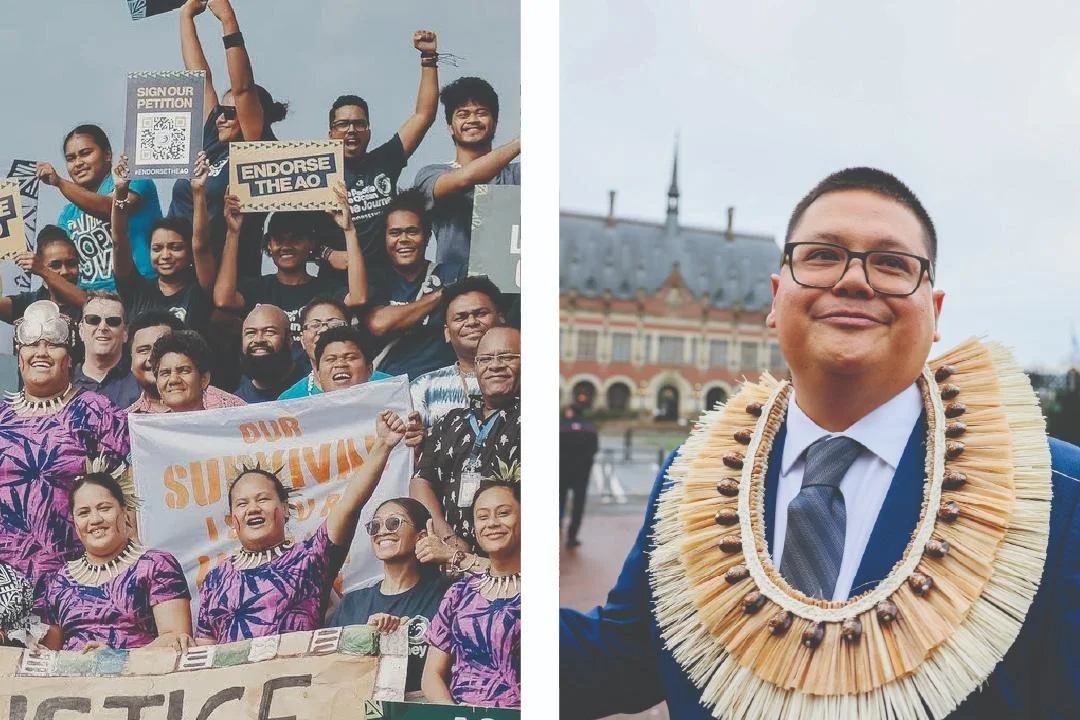
Pacific Islands Students Fighting Climate Change (PISFCC) and Julian Aguon, recipients of the 2025 Right Livelihood Award. Photo: Right Livelihood
Knowledge and Courage as Tools for Change
Hearing Rikimani’s story – and the determination that carried the movement all the way to The Hague – highlighted the power that emerges when law and civic engagement intersect. Their work demonstrates that change does not always begin in negotiation rooms or government corridors; it often starts in classrooms where students dare to think differently.
The visit of a representative from the Right Livelihood Award to Stockholm University on the same day as the award ceremony underscores the university’s role as a space where legal futures are questioned, discussed, and developed – in dialogue with those actively shaping international legal norms.
For many participants, not least the students in the international master programmes in environmental law at Stockholm and Uppsala University, the seminar was more than an exchange of knowledge: it was a reminder of the role that today’s law students can play in tomorrow’s critical legal developments – and that young people, wherever they are in the world, can help drive the evolution of the law.
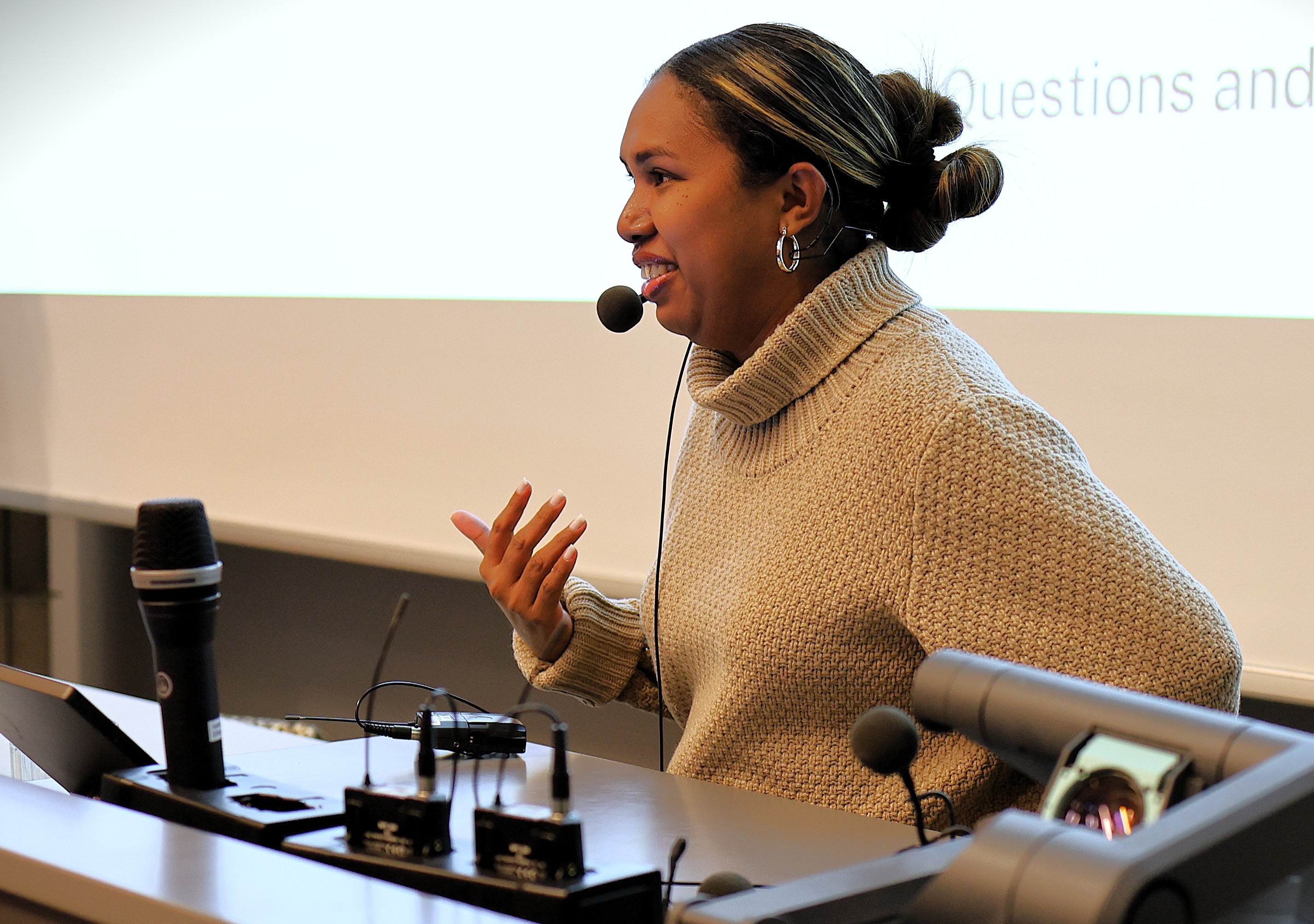
Belyndar M. Rikimani delivered an engaging talk on the theme “From the Classroom to the Court: How It Started”. Photo: Natalie Oliwsson
About Right Livelihood Award
The Right Livelihood Award was established in 1980 to honor individuals and organizations whose groundbreaking work for human rights, social justice, the environment, and peace often falls outside the scope of the traditional Nobel Prizes. It is therefore frequently referred to as “the Alternative Nobel Prize.”
The 2025 award goes to five recipients who, in different ways, advance democracy, climate responsibility, and human security: Pacific Islands Students Fighting Climate Change (PISFCC), Julian Aguon, Justice for Myanmar, Audrey Tang, and Emergency Response Rooms.
Watch the video from Audrey Tang’s visit to Stockholm University on 1 December
Text: Natalie Oliwsson
Last updated: 2025-12-08
Source: Department of Law