


Customary international law methodologies and the contested legality of amnesties
The Stockholm Centre for International Law and Justice (SCILJ) invites you to a seminar with Professor Louise Mallinder on the topic: Customary international law methodologies and the contested legality of amnesties
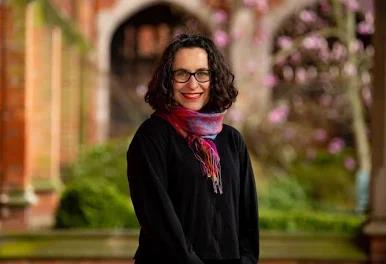
Professor Louise Mallinder
Since the early 2000s, the UN has proclaimed that under international law ‘amnesties are impermissible’ if they prevent the prosecution of persons responsible for genocide, war crimes, crimes against humanity, and serious human rights violations.
This interpretation of international law has been used by the UN, human rights actors, scholars and international courts to assert normative obligations on states to refrain from granting broad amnesties for serious violations, to repeal existing broad amnesties, and to condemn amnesties introduced by other states.
The UN position on the legality of amnesties has been highly influential. However, recent case law from international courts, together with ongoing contrary state practice, raises questions over the extent to which the UN position reflects established customary international law.
This presentation delves into academic debates over the methodologies that can be used to identify and interpret customary international law rules, and demonstrates how a choice of methodology can shape jurists’ determinations of the legality of amnesties.
Bio
Louise Mallinder is a Professor of Law at Queen’s University Belfast and the Deputy Director of the Queen’s Institute of Peace, Security and Justice. In 2024, she was the Pozen Professor of Human Rights at the University of Chicago.
Louise’s research interests relate to the intersections of law and peace. She is an internationally recognized expert on amnesty laws and transitional justice, on which she has written extensively. Her previous monograph on amnesties was awarded the British Society of Criminology Book Prize (jointly awarded) and the Hart Socio-Legal Studies Association Early Career Prize. She also engages in sustained research and advocacy relating to the legacy of Northern Ireland’s conflict.
Louise is a member of the Royal Irish Academy, and a Fellow of the Academy of Social Sciences and the Higher Education Academy.
Registration
SCILJ appreciates your registration at scilj@juridicum.su.se
Last updated: 2026-09-29
Source: Stockholm Centre for International Law and Justice