
From Packets to the Boardroom
Prof. Fredrik Blix Brings a Governance Perspective to Cybersecurity at Strathmore University in Nairobi.
Cybersecurity is no longer confined to firewalls, networks and the technical teams working behind them. As organisations become increasingly dependent on digital systems, questions of risk, accountability, and governance are steadily moving into the boardroom. This was the focus of a guest lecture delivered at Strathmore University in Nairobi by cybersecurity practitioner and Stockholm University lecturer Fredrik Blix, who challenged students to look beyond the technical layer of cybersecurity and understand how security decisions are made at the organisational level.
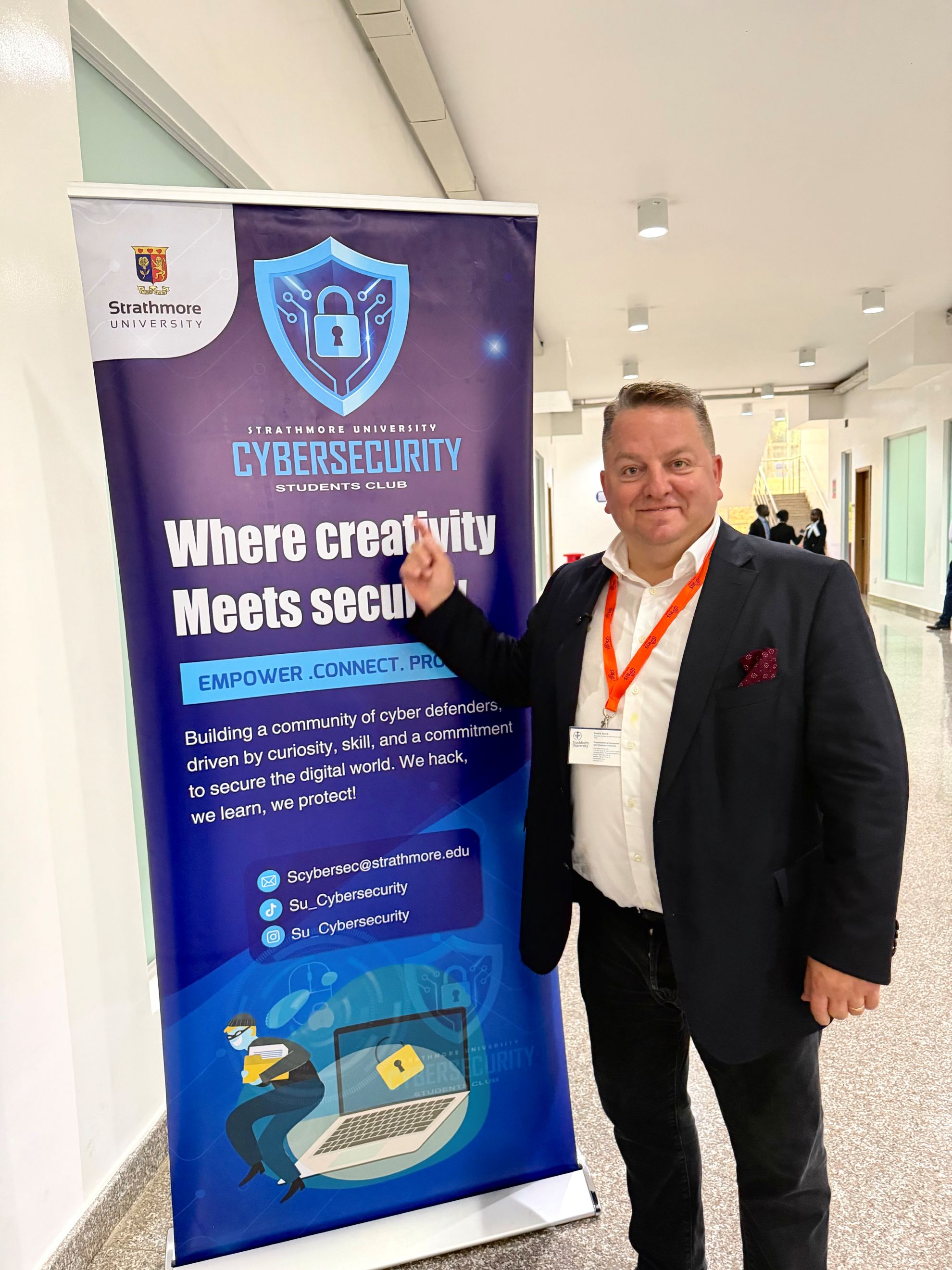
The session, held on 6th October 2026, titled “From Packets to the Boardroom: How Cybersecurity Becomes a Governance Problem,” brought this perspective into focus against the growing scale of cyber threats in Kenya. 2,355,938,192 cyber threat events were detected in Kenya between April and June 2026, according to the National KE-CIRT/CC quarterly report, which translates to approximately 27,000 events every second. This emphasised the need to consider cybersecurity not only as a technical concern, but also as an organisational and governance priority.
Billions of threat events – but what do they mean?
Blix opened with this figure, putting Kenya's cybersecurity environment into perspective; however, it came with an important qualification. These were measured threat events, largely automated attempts, rather than confirmed breaches, victims or instances of damage. For Blix, the statistic demonstrated the scale of activity but also the limits of technology alone.
A security sensor can count thousands of events every second. It cannot determine which systems are most important to an organisation, how much should be invested in protecting them, or who should ultimately accept the risk.
Three layers of cybersecurity
Drawing on three decades of experience across cybersecurity practice, academia, government and business, Blix used real-world incidents to demonstrate how technical vulnerabilities can quickly become organisational problems.
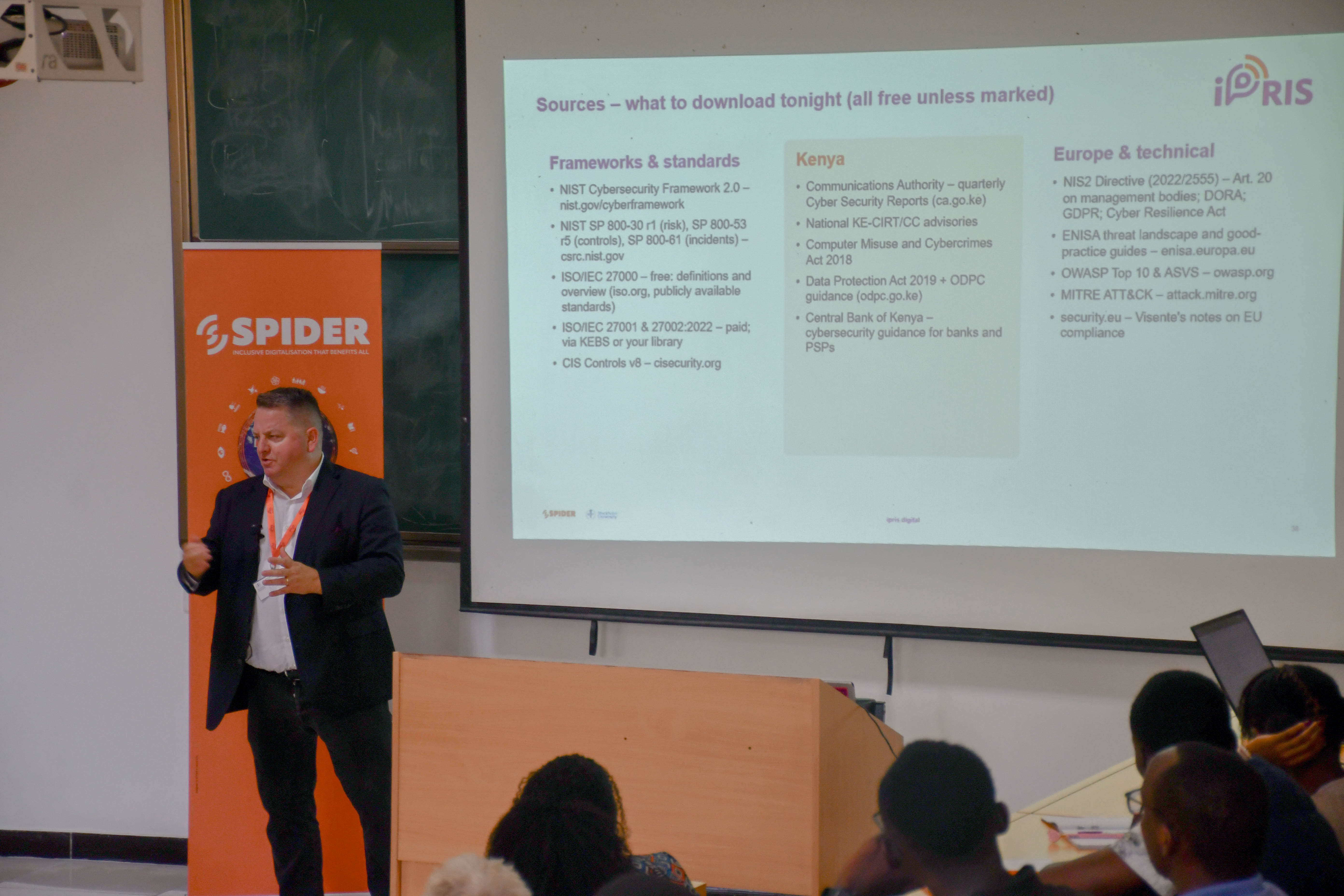
His message to the students was that identifying a vulnerability is only the beginning. The more difficult questions concern what the vulnerability means to the organisation, what action should be taken, who is responsible and how the risk should be managed.
Blix framed cybersecurity through three interconnected levels: technology, management and governance. Technical teams configure and operate security controls. Management makes decisions about risk and resources. Governance provides direction, accountability and oversight.
He argued that Kenya needs more professionals capable of working across these layers.
Kenya needs more competence and more effort in cybersecurity management and governance, and you are the people who can supply it.
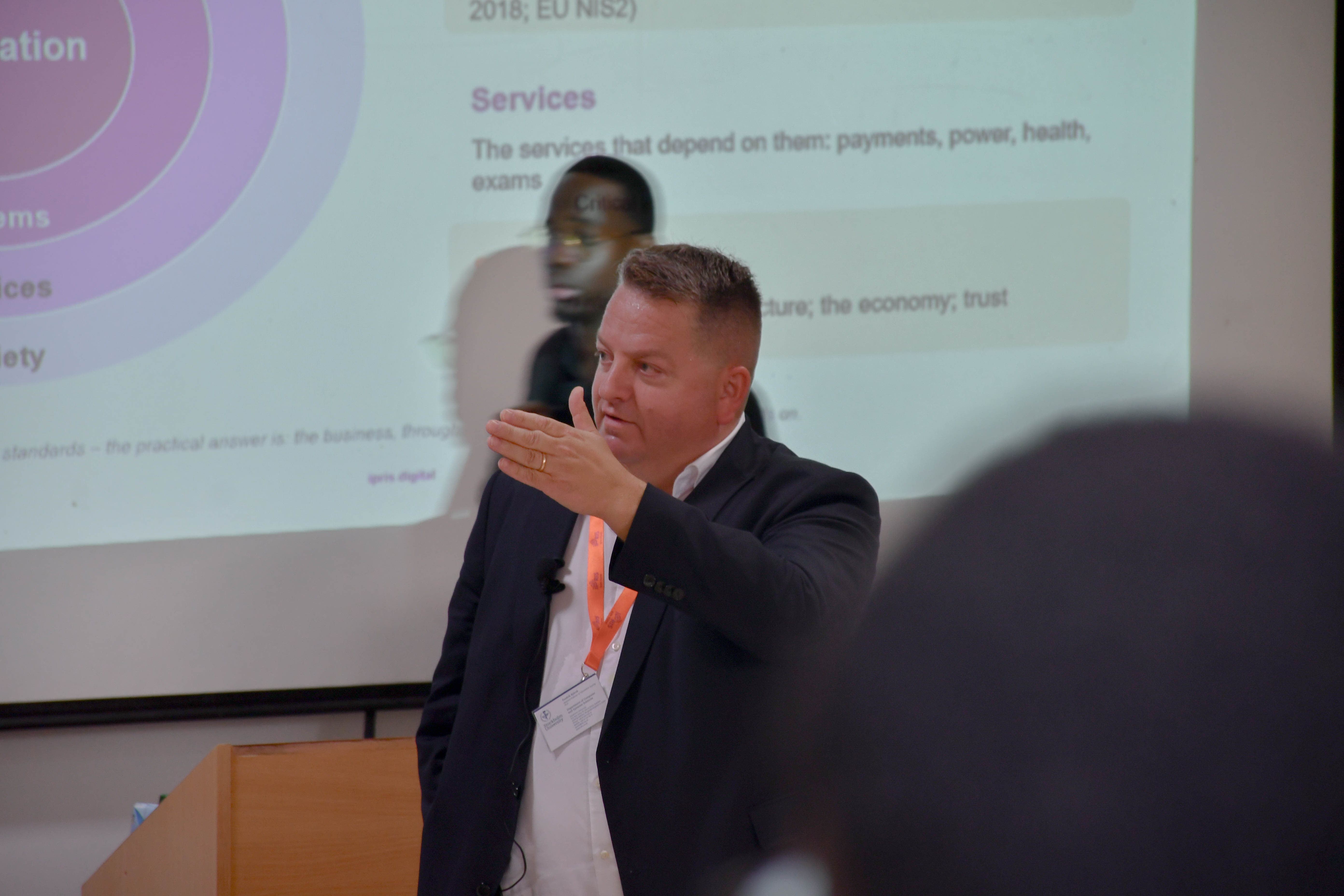
The lecture also challenged the assumption that cybersecurity is only about malicious attacks. Blix explained that organisations must account for accidental human behaviour, structural failures and environmental threats alongside deliberate attacks. The result is a broader understanding of cybersecurity as a management discipline that must balance security requirements against business objectives, cost, and risk.
Learning from each other
The session was part of a knowledge-exchange collaboration involving SPIDER, Stockholm University’s Department of Computer and Systems Sciences (DSV), the iPRIS project, and Strathmore University’s Cyber Security Club. The collaboration builds on SPIDER's broader work to strengthen ICT capacity and encourage institutions and regulators to learn from one another.
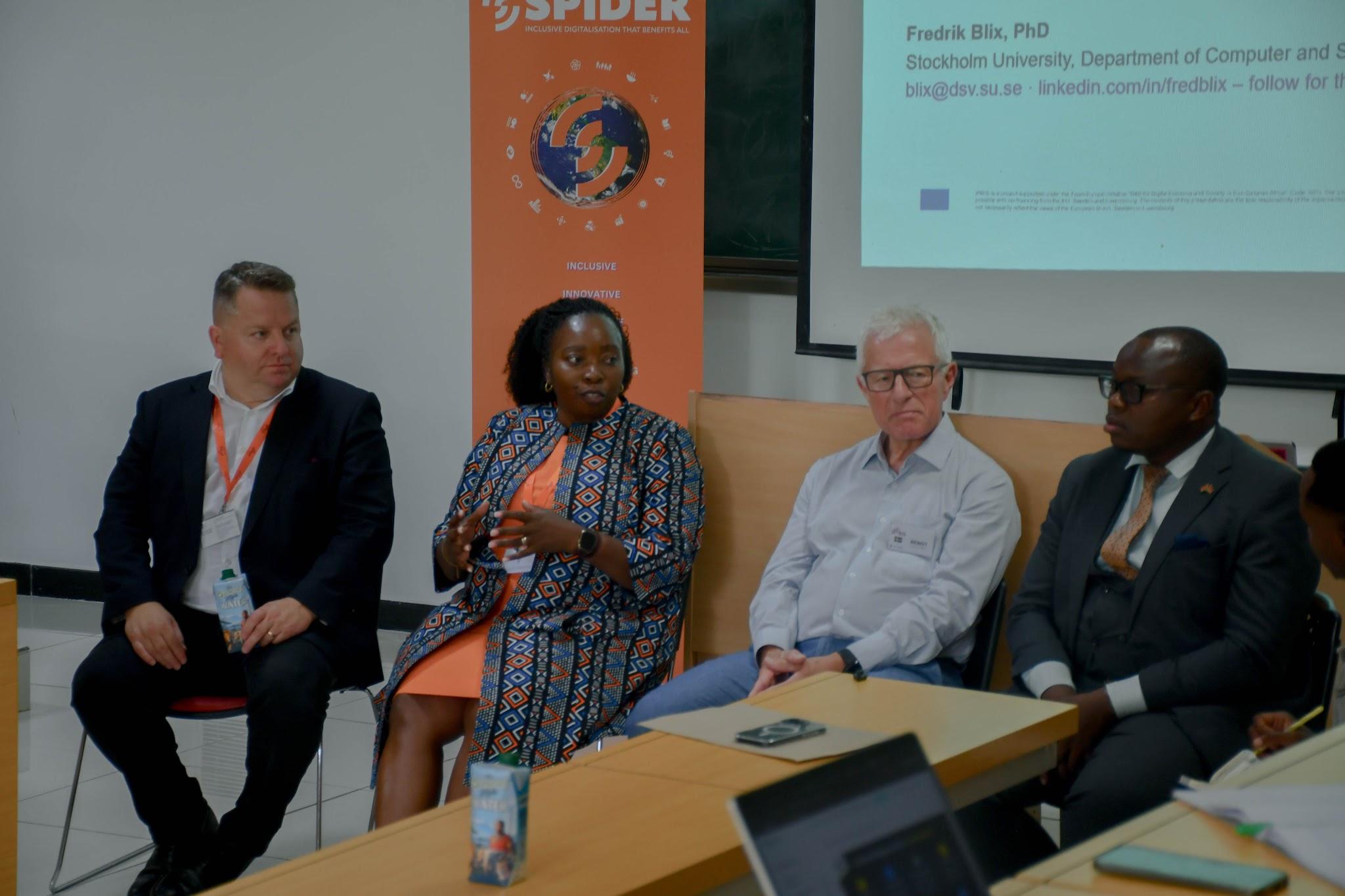
Introducing the wider purpose of the collaboration, Dr. Caroline Wamala Larsson, Director of SPIDER, emphasised the importance of creating opportunities for knowledge exchange rather than institutions repeatedly solving the same problems independently.
One of the major projects we’re running has to do with supporting telecom regulators in order to strengthen their capacity to better serve the digital needs that are happening in any context. The idea is that how can telecom regulators come together and exchange ideas, learn from each other and not reinvent the wheel or repeat mistakes that others have experienced?
Dr. Bengt Mölleryd, an analyst with SPIDER working with telecom regulators and regional regulatory organisations on ICT regulatory data and indicators, added another dimension to the conversation, challenging participants to think critically about the information behind digital decision-making.
Those perspectives provided wider context for Blix's session and reinforced the importance of looking beyond the technical layer when making cybersecurity decisions.

The future of cybersecurity careers
The final part of the lecture turned to the future of cybersecurity careers, particularly the growing role of artificial intelligence in automating repetitive compliance and management tasks. For Blix, the opportunity for students lies not only in becoming technically proficient, but in learning how to communicate technical risk to decision-makers.
Technical depth is the entry ticket. The ceiling is set by how well you translate upward.
The session offered a perspective beyond the traditional image of cybersecurity as a purely technical profession. It connected students to an international knowledge-exchange network and exposed them to the professional realities that sit beyond the tools and technologies they learn in class.

Photo: Show up communications
Last updated: 2026-11-12
Source: Department of Computer and Systems Sciences