


Get to know our new graduate students
This year we are pleased to welcome eight talented new graduate students, whose research covers a diverse range of fields, including family, labor, development, public, and macroeconomics, political economy, and finance. Together, they study how individuals, firms, and institutions shape economic outcomes, from opportunity and inequality to growth and resilience.
Tzu-Hsi (Jessie) Chen
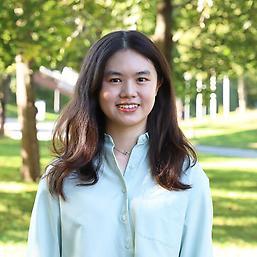
"My research interests are mainly in family economics, with overlaps in labor, macro, and health. More specifically, I am interested in studying how marriage markets work, how families make decisions, and how these choices affect their offspring and others in the economy.
I am currently working on a project that explores the life-cycle aspect of marriage market matching. Another ongoing research investigates the intergenerational transmission of violence and other disadvantages.
I joined the IIES because of its collaborative atmosphere and welcoming community of students and faculty."
Paola Giannattasio
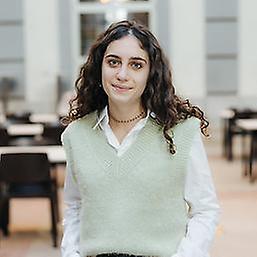
"My research interests lie at the intersection of economics of education and political economy, with projects examining how to improve outcomes for disadvantaged students and how policies and institutions shape who has access to opportunities.
In one project, I evaluate a remedial education programme targeting marginalised communities in Spain. More broadly, I am interested in how the allocation of teachers across schools contributes to inequality in educational opportunities.
I look forward to joining the IIES, whose collaborative environment and close interaction with faculty working on related questions provide an ideal setting to develop my research."
Marie Kaul
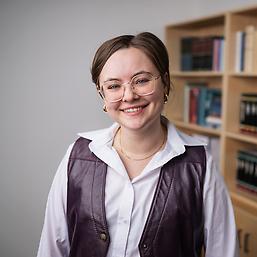
"My research interests lie in labor, urban and gender economics. I am particularly interested in how institutions and public policy shape both individuals’ opportunities and the sorting of firms and different groups of people across space.
Currently, I am working on a project on intimate partner violence, studying the causes and consequences of leaving an abusive relationship, with a focus on access to affordable housing.
I chose the IIES because of its strong tradition of applied microeconomics, its supportive faculty, and its collaborative community of PhD students, which make it an ideal place to develop my research."
Parijat Maitra
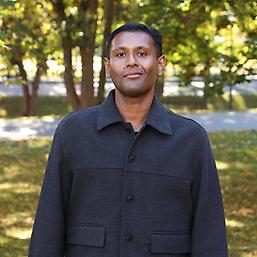
"My research is situated at the intersection of development, labor, and political economy, with a particular focus on climate change adaptation and resilience, health, human capital, and gender-based violence. I combine insights from the natural sciences with applied microeconomic tools for causal identification.
My current research asks when the welfare state can provide insurance against climate risk (and when its own constraints amplify vulnerability); whether inadequate resilience reflects too little public investment or failures to coordinate complementary investments; and when public restrictions on private choices preserve shared natural capital (or instead obstruct adaptation and shift costs onto others).
I chose the IIES for the opportunity to interact closely with researchers across development, labour, and political economy, and to develop this agenda in an environment where careful empirical work connects to larger questions about institutions and welfare."
Maria Martinho
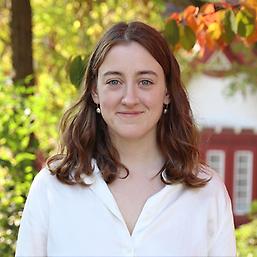
"I am broadly interested in labor and public economics.
In my current research, I study how individuals make labor supply choices over the life cycle, with a focus on how they trade off wages against job amenities and against family formation, and how these choices affect inequality and intergenerational mobility.
I joined the IIES for its collaborative environment, joint supervision approach, and the overlap between its research areas."
Joakim Jigling
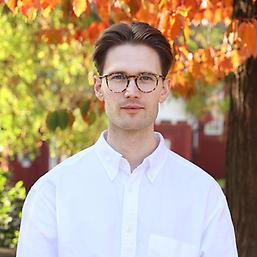
"My research interests lie at the intersection of theoretical and quantitative macroeconomics and finance. Topics of interest include business cycles, monetary economics, and asset pricing.
In my current research I investigate how corporate capital structure is affected by taxation.
The IIES is an especially attractive environment for pursuing this agenda because of its position at the frontier of macroeconomics and its long tradition of rigorous research in macroeconomics and related fields."
João Quelhas
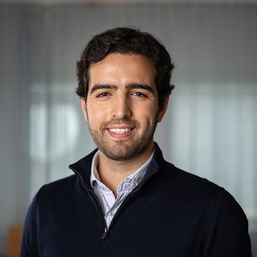
"My research interests lie in macroeconomics, with a focus on the interaction between micro-level heterogeneity and aggregate outcomes. I am particularly interested in combining rich administrative microdata that I have been working with for Portugal, Sweden, and the US with disciplined quantitative models to study how frictions shape economic behavior and policy effectiveness. My goal is to develop expertise in building, solving, and calibrating structural models that are tightly linked to empirical evidence, allowing for credible quantitative evaluation of economically relevant questions.
I have been working mainly on macro-banking topics, but I am also fascinated by questions related to firm dynamics and macro-labor.
I believe that IIES offers a uniquely stimulating research environment to pursue my doctoral studies, benefiting from both outstanding faculty and a highly collaborative academic community. My research agenda aligns closely with several of the Institute’s most active areas."
Edvin Wastegård
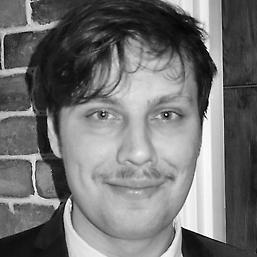
"My research interests centre on macroeconomics, particularly entrepreneurship and structural transformation. I am interested in how decisions made by individuals and firms in response to their economic environment affect long-run growth and the structure of the economy.
In my current projects, I use Swedish administrative data to study these questions. One project examines who becomes an entrepreneur and how founders’ age and previous labour market experience relate to the growth and survival of their firms. In another project, we study Sweden’s tax deduction for household services (rutavdraget) and the growth of the paid household services sector.
Having previously worked as a research assistant at the IIES, I have gotten to know its faculty and fellow PhD students and have come to feel at home in its warm and open research environment. Together with its strengths in both macroeconomics and microeconomics, this made the IIES a natural place to develop my research agenda."
Last updated: 2026-10-20
Source: Institute for International Economic Studies