


New doctoral thesis 2026: Intersubjectivity and Digital Mediation in Multilingual Workplaces
Azar Raoufi defended her doctoral thesis in Scandinavian Languages in 2026: Intersubjectivity and Digital Mediation in Multilingual Workplaces. Department of Swedish Language and Multilingualism at Stockholm University.
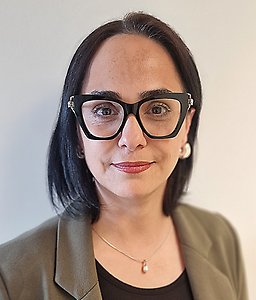
Azar Raoufi. Photo: Pia Nordin.
Doctoral thesis and abstract
Doctoral thesis in publication database DiVA:
Intersubjectivity and Digital Mediation in Multilingual Workplaces
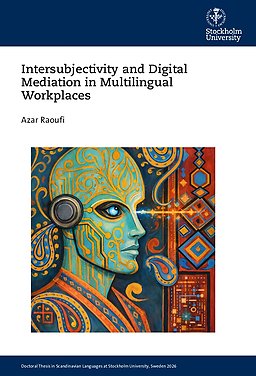
This dissertation examines how intersubjectivity is accomplished in multilingual workplaces under conditions of linguistic diversity and technological mediation. Adopting an ethnomethodological conversation analytic perspective, it analyzes how participants organize meaning-making, participation, and epistemic positioning through the sequential coordination of talk, embodied conduct, and material resources. The data consist of approximately 55 hours of video- and audio-recorded workplace interaction from five workplaces in Sweden and include both unmediated and digitally mediated interactions involving tools such as Google Translate and ChatGPT.
The dissertation comprises three studies. The first investigates how coworkers make linguistic knowledge interactionally relevant in informal peer interaction, showing how such moments reorganize epistemic positioning and membership categories. The second examines smartphone-based translation with Google Translate, demonstrating how participants extend turns across pre-, production-, and post-phases and incorporate processing delays into sequence organization. The third analyzes AI-mediated interpreting with ChatGPT, showing how system outputs become accountable interactional contributions that participants interpret, repair, and assign responsibility for.
Together, the studies show that multilingual workplace communication relies on participants’ collaborative management of linguistic diversity and asymmetry across both unmediated and technologically mediated interactions. Intersubjectivity is secured through adaptive turn management, multimodal coordination within hybrid participation frameworks, and ongoing negotiation of epistemic positioning. The dissertation contributes to EMCA research by examining how sequential organization operates when actions are distributed across human participants and technological systems, and to the research field of Scandinavian languages research by providing detailed analyses of language use and participation in contemporary multilingual workplaces.
Last updated: 2026-06-11
Source: The Department of Swedish Language and Multilingualism