Two new professors in psychology
We are pleased to announce that the Department of Psychology now have two new professors in our staff, Sabina Čehajić-Clancy and Christine Fawcett. We asked them a couple of questions to get to know them better.

We are pleased to announce that the Department of Psychology now have two new professors in our staff, Sabina Čehajić-Clancy and Christine Fawcett. We asked them a couple of questions to get to know them better.

Often called the "love hormone," oxytocin helps us form bonds, build trust, and navigate social interactions. Researcher Shanshan Xiao explores how oxytocin affects the brain, aiming to understand its potential benefits in healthcare.

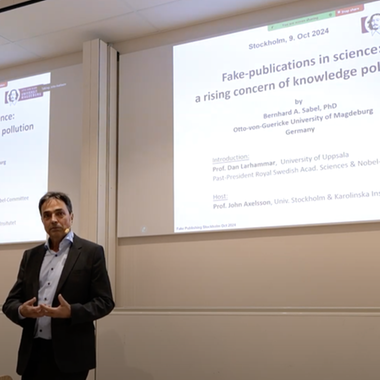
In October 2024, Professor Emeritus Bernhard A. Sabel, PhD, from the Otto-von-Guericke University of Magdeburg, gave a lecture on "Fake-publications in science: a rising concern of knowledge pollution".

Light truly conquers darkness. Associate Professor Arne Lowden writes in The Conversation about how outdoor walks and artificial light can enhance your well-being and help prevent depression during the long, dark winter.

In his doctoral thesis, Yannick Klein has investigated the relationship between nature exposure and mental health in adults in Sweden, both before and during the COVID-19 pandemic. His studies shows that both active and passive exposure to nature have positive effects on mental health.

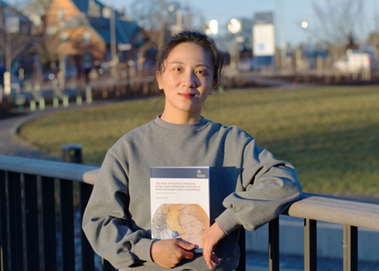
In his thesis, Erik Forsberg examines basic moral psychology and related questionnaires. He has also developed a new software, D3mirt, which provides a more detailed and visual picture of how moral values can be measured.

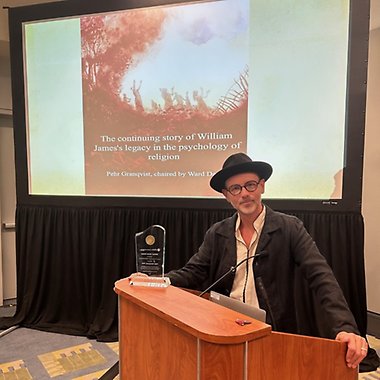
The origin of the Department of Psychology is to be found in the inauguration of the Olof Eneroth professorship at Stockholm University College in 1937. In 2024, Professor Pehr Granqvist was appointed the sixth holder of this title. Below is his informal inaugural address, where he is also announcing the Eneroth Lectures.

The recent intensification of intergroup conflicts around the world highlights the importance of finding ways to reconcile members of adversary groups.

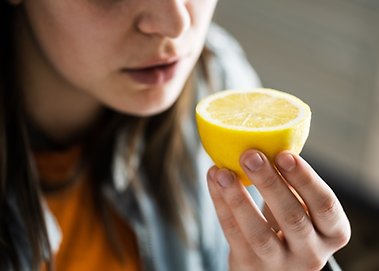
The sense of smell is highly influenced by the cues from other senses, while the sense of sight and hearing are affected to a much lesser extent, shows a new study in Journal of Neuroscience.

Feeling sleepy can make you feel ten years older. Researchers at Stockholm University have discovered that sleep affects how old you feel. The study is published in the scientific journal Proceedings of the Royal Society B.