


Course in cultural evolution offers new perspectives on human behaviour
How does cultural diversity emerge? Why do humans develop complex societies, norms and traditions, while other species do not in the same way? These are some of the questions explored in the interdisciplinary master's course Cultural evolution: theories and observations (7.5 credits).
The course brings together students from the humanities, social sciences and natural sciences to explore how culture changes over time. By combining theories and methods from multiple research fields, participants gain new tools for understanding human behaviour and social phenomena.
"The course is suitable for anyone who wants to understand humanity beyond the boundaries of a single discipline. You may be curious about why people behave the way they do, how culture emerges and changes, or how biological, psychological and social processes are interconnected. Students can come from any academic background," says Anna Jon-And, course examiner.
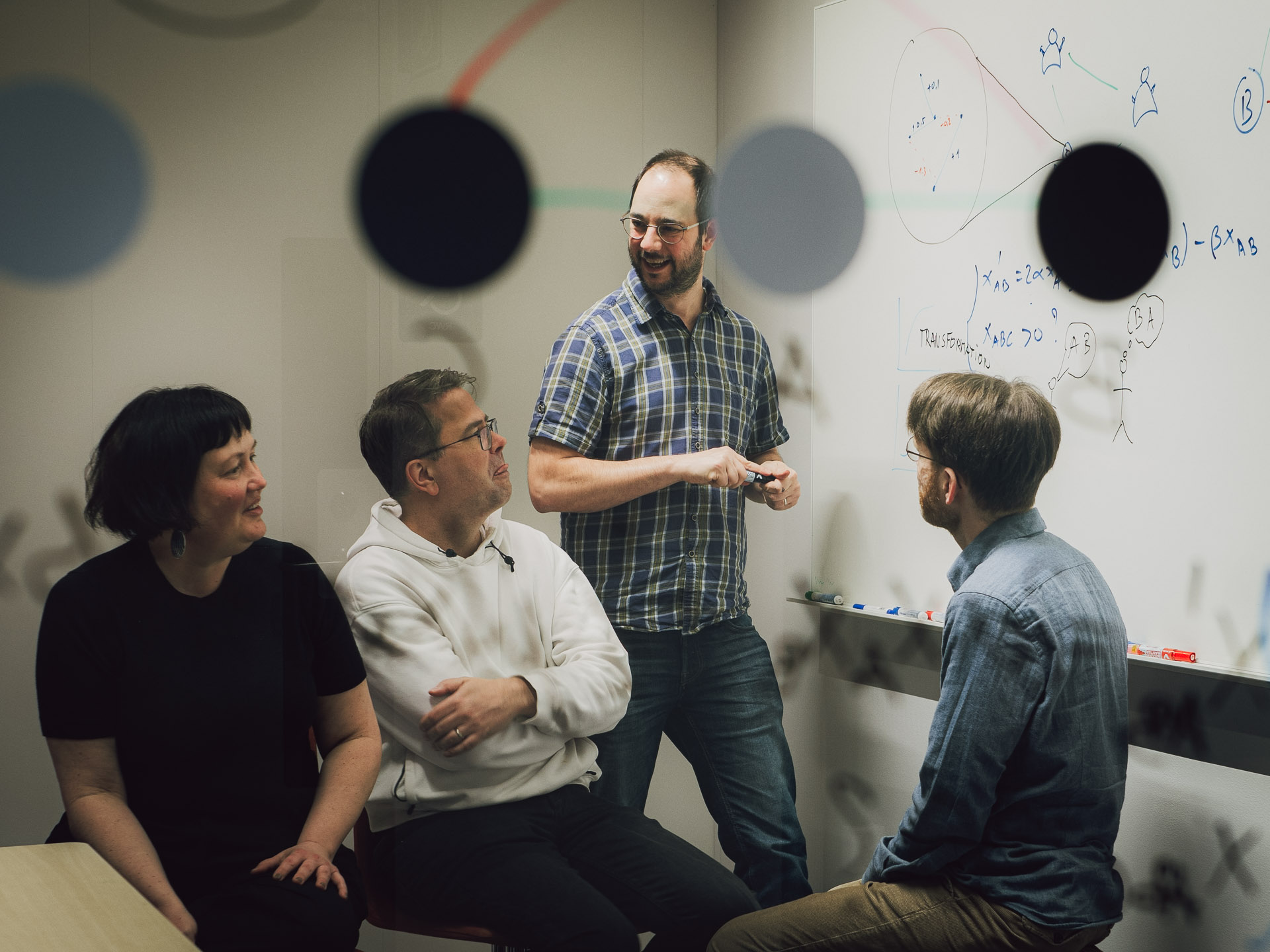
Photo: Johan Lind
Culture, humanity, and mathematics?
During the course, students study patterns of cultural change and analyse the factors behind the emergence of cultural complexity and diversity. Questions about what distinguishes human cultural abilities from those of other animals are also central themes.
The course also introduces mathematical models and experimental methods used in cultural evolution research. The aim is to show how ideas can be formalised and transformed into testable hypotheses.
However, students who are hesitant about mathematics need not worry.
"Not at all. We are happy to help even those with a fear of mathematics overcome it. Likewise, you do not need to be an expert in biology or social science theories, even though both are important components of the course," says Fredrik Jansson, who also teaches on the course.
He emphasises that the course is as much about exploring new perspectives as it is about deepening existing knowledge.
"For students already familiar with mathematical models, the humanities component may be the most novel aspect. Conversely, students who are used to verbal and qualitative theories have the opportunity to become acquainted with formal methods."
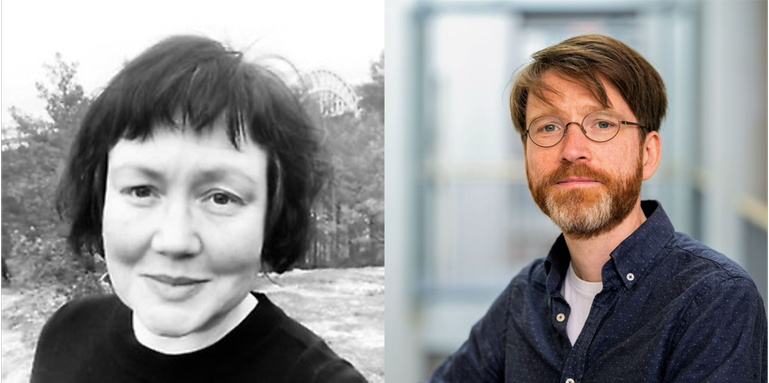
Anna Jon-And and Fredrik Jansson
Where different perspectives meet
An interdisciplinary perspective runs throughout the course, and one of its greatest strengths is the diversity of its participants. Students engage with both researchers and fellow students from different academic fields, creating an environment where different ways of thinking enrich one another.
"Students bring different perspectives and different forms of knowledge, which often makes the discussions unexpected and engaging," says Anna Jon-And.
Fredrik Jansson highlights that the interdisciplinary environment is equally rewarding for the teaching staff.
"We are able to tackle and answer important questions that cannot be studied from the perspective of a single traditional discipline. Because we share an interest in the same topics but approach them in slightly different ways, it is possible to learn a great deal very quickly that is directly relevant to one's own work. It is so rewarding that we teachers often attend each other's lectures as well."
Note: The course is offered by the Department of Biology Education in collaboration with the Centre for Cultural Evolution and the Department of Psychology.
Last updated: 2026-09-21
Source: Department of Psychology