


International Day of Women and Girls in Science: “I knew at 14 that I wanted to become a researcher”
From an early age, Julie Lasselin knew she wanted to become a researcher, first driven by the ambition to find a vaccine against AIDS. Today, her work explores the connection between the brain and the immune system.
Julie Lasselin is an Associate Professor in Psychoneuroimmunology at the Department of Psychology. In this interview, she shares what has motivated her journey, why celebrating women and girls in science matters, and the importance of having role models and encouragement in academia.
When did you decide to become a researcher?
– I feel very lucky to have known that I wanted to be a researcher very early on. From the age of 14, I remember clearly that I wanted to become a researcher in immunology, to find a vaccine against AIDS. Then when I was 16, my mother gave me an article on the placebo effect in which they mentioned the groundbreaking studies of Bob Ader, who showed that the immune system could be conditioned, like the Pavlov’s experiment, but instead of saliva, it is immune cell functions that is conditioned with saccharine solution. From then, I knew I wanted to understand how the brain and the immune system influence each other. I did not know then that it was called Psychoneuroimmunology!
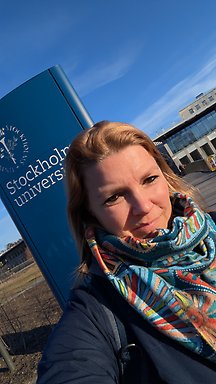
– It was truly a blessing to know this because it shaped all my decisions about my education, from high school to university, including the choice of moving from my hometown in the north of France to Bordeaux for my Master internship and then PhD. But it has also been challenging at times because I could not picture what else I could do – so when failure occurred – or a sense of potential failure – it was like I would not be able to be happy in life. But it definitely gave me the grit to fight.
Featuring women in science can inspire young girls in trusting they can become scientists if they wish.
11 February is the International Day of Women and Girls in Science. Why is it important?
– I think this is a very important initiative! Featuring women in science can inspire young girls in trusting they can become scientists if they wish. It also provides recognition to the women in science, who struggle on many fronts to keep up in academia.
Do you have any (female) scientist role model? Who do you look up to and why?
– I guess many women scientist do? To have these successful role models help me believe that I can make it. Mine are:
Karin Jensen (Karolinska Institutet) is my role model of a successful woman in science. She is conducting brilliant research – I am particularly amazed by her research on the placebo effect – and is a caring and protective group leader and mentor. Every meeting with her energizes me and gives me confidence in my own abilities.
Asya Rolls (Tel Aviv University) is pushing the boundaries of my field and has received several ERC grants. Her translational research on how the brain influences immune functions is mind blowing. She makes me believe that pursuing risky projects in science is possible.
Sabina Cehajic-Clancy (Stockholm University) is always energetic and smiling, and has these really innovative ideas that can actually change the world. She’s also received an ERC; and I am in awe watching her navigate academia as she does, with such strength and energy.
Julie’s best advice for someone who wants to pursue an academic career:
Passion: First of all, I do believe that passion is necessary. It is not an easy world, but all the challenges feel much easier when you are pursuing your passion and that your job does not feel like a job.
Grit: Then, I would say grit: never give up; if you fall, take a few days and then rise on your feet again.
Support: But most importantly, find a mentor that will support you, elevate you, and fight for you throughout your career – for me, that is Mats Lekander.
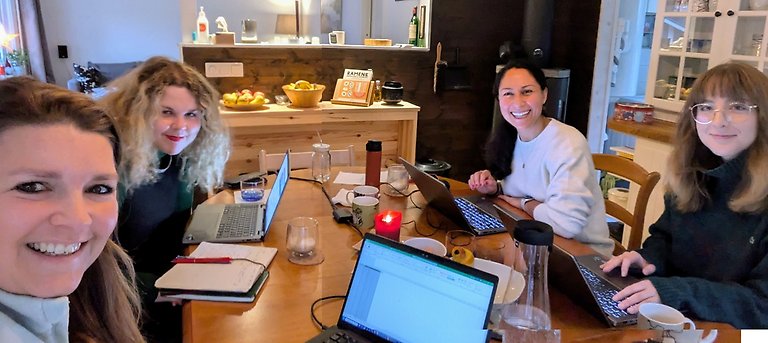
Julie Lasselin with her team. Photo: Private
Last updated: 2026-02-10
Source: Department of Psychology