


Meet the New Research Assistants Behind the Scenes
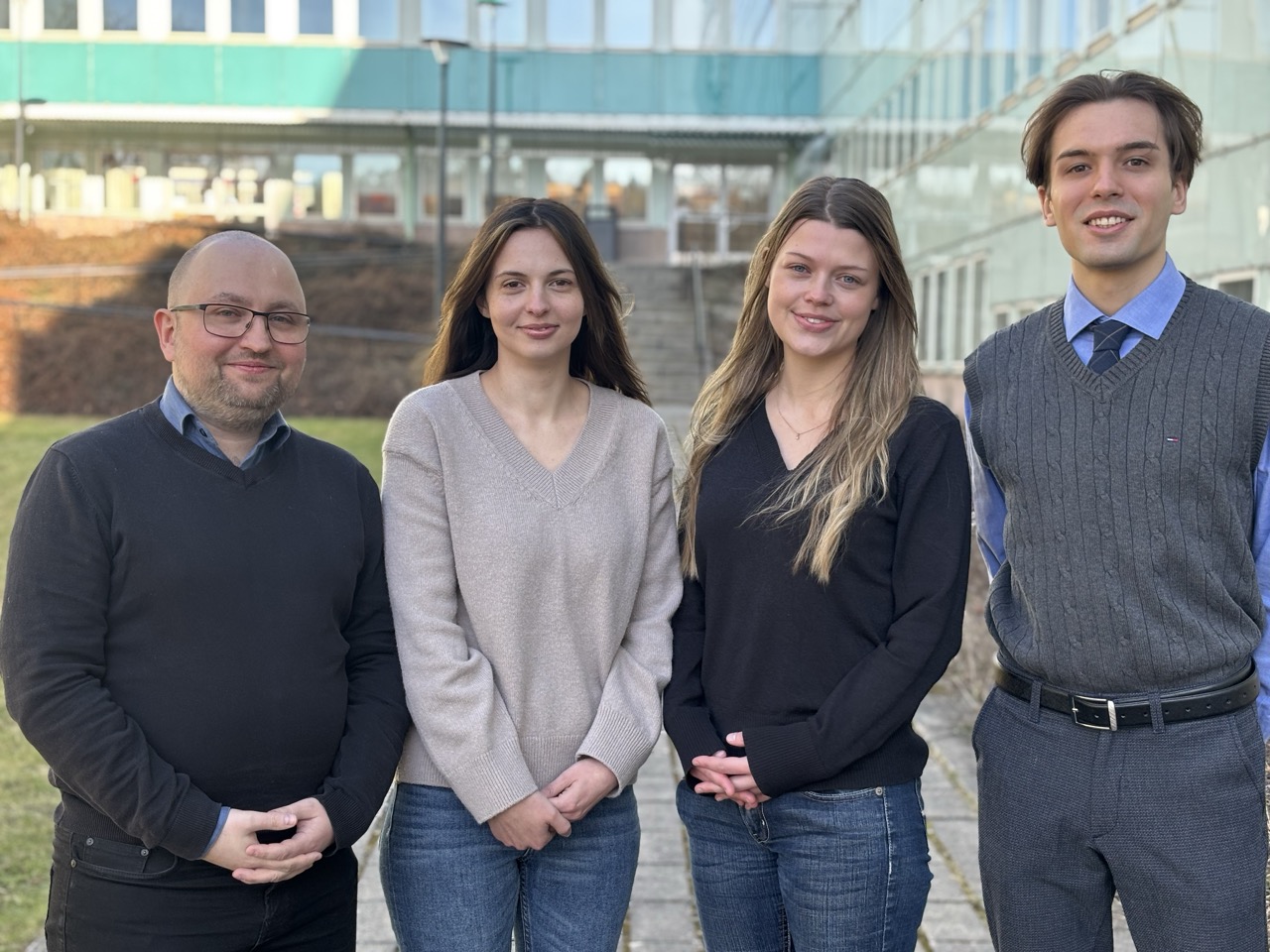
From left: Lee Dechan, Sarah Casentini, Linda Graff and Serhii Romanov. Photo: Svante Emanuelli/Stockholm University
This January, the Department of Political Science at Stockholm University welcomed a cohort of senior and junior research assistants – each bringing fresh eyes to some of the most pressing questions of our time: How do democracies regulate social media platforms? What shaped local political representation in the 1930s? And can artificial intelligence unlock centuries of diplomatic history?
PUBLISHED: March 6, 2026
UPDATED: March 10, 2026
Graham Hobbs, a senior research assistant and teacher, has joined Ludvig Norman's project "Shaping the Online Public Sphere" – an investigation into how and why democracies regulate social media platforms. "My own research is quite different, on theorising trans-Atlantic relations, on Britain's relationship to the US and its warfare state", he stated.
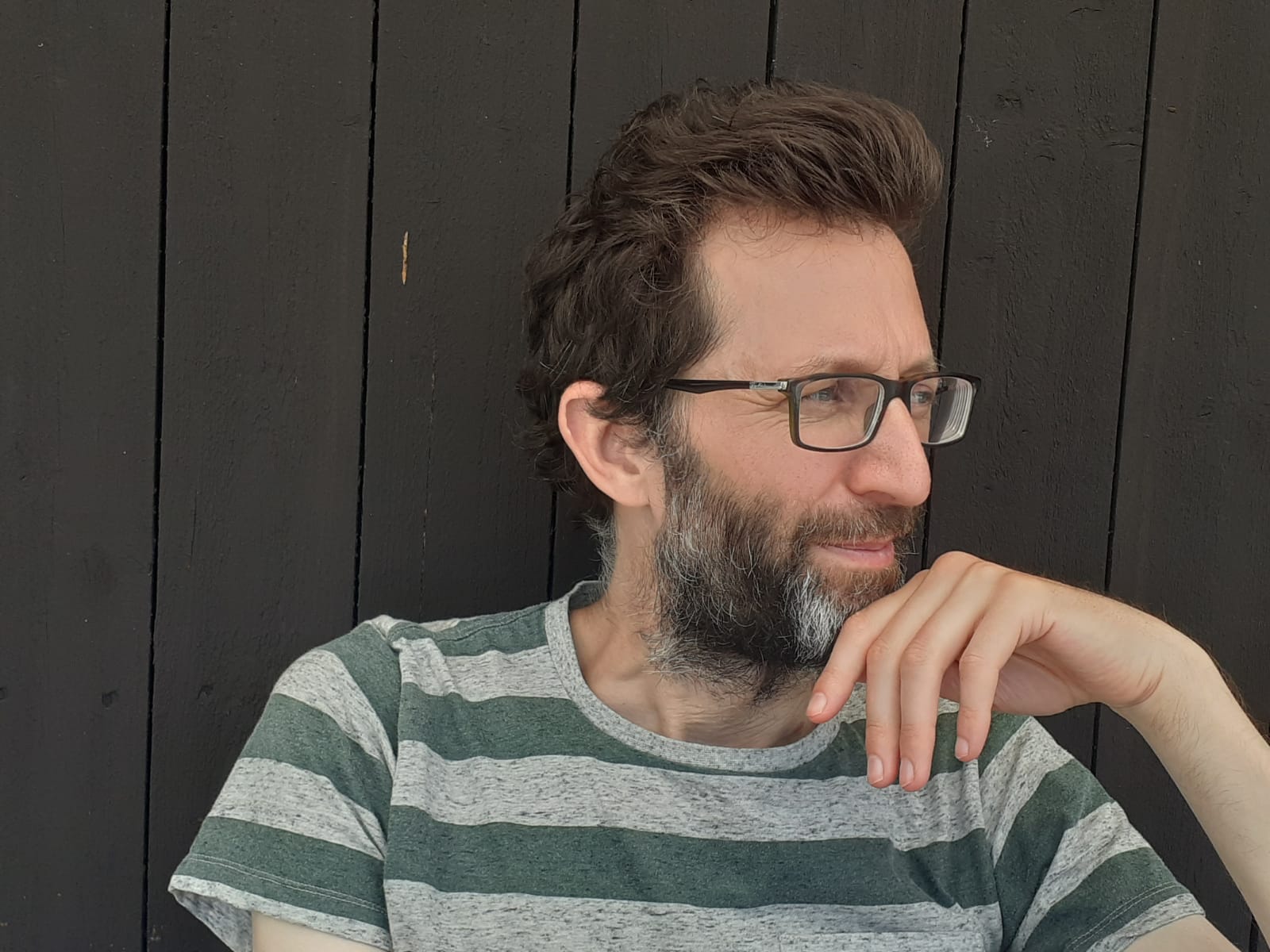
Graham Hobbs Photo: Personal photo
Two newer research assistants have also joined Norman's data collection team. Sarah Casentini, an MA student, focuses on identifying and coding national policies on online content regulation. She describes herself as deeply interested in online political disagreement – a theme she explored in her master's thesis.
Lee Dechan, newly appointed vice-chairman of the Political Science Student Council (SVÄR), is building the analytical architecture of the project. "Think of it as a net," he explains, "where we want to capture as much as possible, but in a way that allows us not to get too rigid." Using NVivo software, he codes national regulations across democratic states to build a comparative dataset of global online governance.
Linda Graff brings a different angle. Fresh from a master's thesis on radical-right parties and trade policy, she now supports several of Professor Kåre Vernby's research projects – from literature reviews on political ambition to historical data collection at the National Archives, tracing party participation in Sweden's municipal elections of the 1930s. "There is very little that doesn't spark my curiosity," she admits, while seriously weighing a future PhD.
The master's student Serhii Romanov has joined Professor Jonas Tallberg's project "Democracy, Autocracy, and International Cooperation (DEMCOOP)" – and he has brought artificial intelligence with him. His mission: to make sense of the World Treaty Library, a database of over 3.5 million pages of diplomatic documents stretching from the mid-17th century to the present. The challenge is formidable. Documents arrive in Spanish, French, Italian — and Latin. The database itself is, in Romanov's word, "messy": buried among interstate agreements are aristocratic marriage contracts and texts that aren't treaties at all.
"Without AI, these insights would remain locked away in archives, inaccessible to researchers," Romanov says. Over 70,000 pages require translation, and about 3 million require classification – a task no human team could complete alone. His broader research interest? How autocracies influence — and potentially reshape — global governance.
"This is fascinating," he reflects, "because it fundamentally changes what questions we can ask and answer in political science."
The projects
Professor Kåre Vernby's Research Projects
Linda Graff
Internship: Not specified.
Democracy, Autocracy, and International Cooperation (DEMCOOP)
Serhii Romanov
Internship: January–June 2026
Shaping the Online Public Sphere: How and Why do Democracies Regulate Social Media Platforms and with what Consequences?
Research project led by Ludvig Norman, Associate Professor.
Graham Hobbs
Contract: December 2025–September 2026.
Lee Dechan
Internship: Spring 2026
Sarah Casentini
Internship: January-June 2026
Julia Adler
Julia Adler has also contributed to Norman's project, and is now moving on.
Last updated: 2026-03-10
Source: Department of Political Science