News

  • Fashion Meets Law: Insights from Sweden's Inaugural Fashion Law Conference

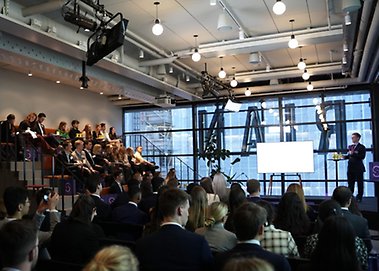
    The first Fashion Law conference in Sweden was organized by the Stockholm IP Law Review and the Institute for Intellectual Property and Market Law (IFIM) on 28 May 2024. The event was highly successful and received with great enthusiasm by professionals in the fashion industry. The conference, with the title "Undressing the Law: The Future of Fashion and Innovative Business Models” had as its ambition to create a common platform for lawyers working with or interesting in the fashion industry and the fashion industry in its different expressions.  The conference succeeded in creating an interdisciplinary environment due to the mixed background of the audience but also of the speakers and panels. A particular focus was placed on the implications of AI in the creative processes and how this impacts the protection of fashion as well as of the fashion industry's business models. Upcycling and sustainability both as the industry's own objectives as well as of main points of reference for the current and future regulation of the fashion industry on a national and EU level, and its relation to requirements of the intellectual property system were discussed and concrete examples illustrating both the potential and challenges were debated in the panels.  Designers, creative directors, sustainability experts, researchers, lawyers exchanged ideas on the current challenges faced by the fashion industry and the ways in which we can boost the industry in the future.  According to professor Frantzeska Papadopoulou:   "We hope that this event was the first one of many to come, and the first step in gathering players from the legal and fashion community, exploring ways of working together towards a more sustainable, innovative and collaborative future." Sponsors and partners The conference was generously sponsored by the Cassel Foundation, hosted in the premises of Vinge and supported by the Association of Swedish Fashion Brands.  Conference curators were prof. Frantzeska Papadopoulou Skarp, Stockholm university, and Creative Director Annika Berner.  About Stockholm IP Law Review The Stockholm University Intellectual Property Law Review (SIPLR) is a student-led journal of legal scholarship with a focus on European Intellectual Property Law. The primary purpose of SIPLR is to create an academic legal forum where the most influential and significant topics of IP law are discussed by students, scholars and lawyers. The Editorial Board comprises of students and the programme directors of the Master’s Programme ‘European Intellectual Property Law’ from Stockholm University. Students are selected in the first semester of the course. stockholmiplawreview.com/ About IFIM  Founded in 1956, Institute for Intellectual Property and Market Law (IFIM) is based at the Faculty of Law of Stockholm University. IFIM’s core mission is to promote research and education in the fields of intellectual property law and market law. To this end, IFIM undertakes several activities, including organizing events, maintaining and developing a special Library, and promoting knowledge of and research in the fields of intellectual property and market law. ifim.se/

    Department of Law
  • Fintech Competition Explored in New Anthology by Leading Scholars

    The anthology "Fintech Competition: Law, Policy, and Market Organisation" is Volume 17 in the series Swedish Studies in European Law, published by the Swedish Network for European Legal Studies. The editors are Konstantinos Stylianou, Marios Iacovides, and Björn Lundqvist.

    Department of Law
  • New book about the Instrument of Government – 50 years

    The anthology ”Constitutional Law in the Scandinavian Countries - A tribute to the Instrument of Government 1974-2024” is volume 70 in the book series Scandinavian Studies in Law, published by the Stockholm Institute for Scandinavian Law at the Faculty of law, Stockholm University. The volume editor is Professor Karin Åhman.

    Department of Law
  • The Challenges of Refugee Protection in a World Effected by Terrorism

    In a recently published dissertation the intricate challenges within international refugee law related to issues of when an individual is excluded from universal humanitarian protection are thoroughly examined. This study underscores the necessity for a system that effectively safeguards the most vulnerable while addressing new and evolving threats, such as terrorism.

    Department of Law
  • Regulation of AI in the workplace

    In a recently published research paper, Sonia Bastigkeit Ericstam, PhD student in civil law, examines the legal framework regulating algorithmic managementin the workplace - in particular regarding employee consent to the use of algorithms.

    Department of Law
  • PhD students connect coast and society in a changing climate

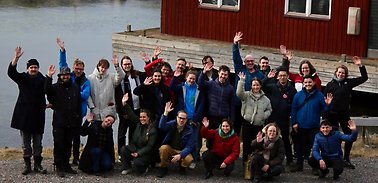
    Solving complex questions about interactions between the sea and climate change, and how they relate to society, requires a broad set of skills. In a new research school, PhD students from diverse scientific disciplines at Stockholm University get a unique opportunity to learn how transdisciplinary approaches and research communication can lead to sustainable management of coastal environments. What unites students in from widely varied subjects like marine geology, business accounting, and ecotoxicology? They all provide important perspectives necessary to answer questions on societal challenges and solutions to climate change in coastal seas. During a kick-off meeting for the research school Perspectives on climate change in coastal seas in March, 14 new PhD students were introduced to this framework that will be their research focus for the coming years. "I feel proud to be part of this program, and though this transdisciplinary context is new to me, I think I have a lot to bring to the table," says Emma Flévaud, PhD student in environmental law.   Adding new pieces to the puzzle The oceans face multiple climate-related pressures such as acidification, oxygen deficiency and rising temperatures. These, among others, cause feedbacks that release potent greenhouse gases into the atmosphere, reinforcing the climate effects. However, under healthy conditions with prospering ecosystems, the coastal zones have effective carbon storage capacities and can be important carbon sinks. "If we manage the coastal zones right, they could globally contribute to 20 percent of the greenhouse gas emission reductions we need to fulfill the Paris Agreement," says Christoph Humborg, Scientific Director at Stockholm University Baltic Sea Centre and one of the initiators of the research school. This intricate puzzle is partly understood and described in science, and questions remain about the links between climate change, biodiversity and the full potential of the coastal zones to serve as climate mitigators. In research initiatives like CoastClim experts in ecology, modeling, marine physics, and atmospheric sciences explore these links. For the next couple of years, the students from Stockholm University will be involved in research questions that add important information in this context.

    Stockholm University Baltic Sea Centre
  • IPKat Copyright Book of the Year 2023 award to Eleonora Rosati

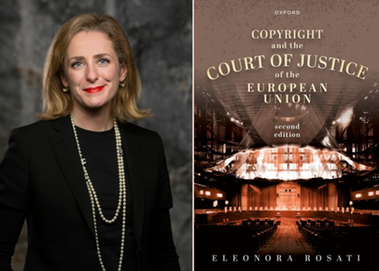
    Eleonora Rosati, Professor of Intellectual Property Law at Stockholm University, published her book "Copyright and the Court of Justice of the European Union" in the autumn of 2023. It has now been named the best book of the year on the subject of copyright by the international IPKat.

    Department of Law
  • New edition of Stockholm IP Law Review

    The Stockholm Intellectual Property Law Review (SIPLR) is a journal of legal scholarship with a focus on European Intellectual Property Law. The Editorial Board comprises of students and the programme directors of the Master’s Programme ‘European Intellectual Property Law’.

    Department of Law
  • Quest for Fair Pricing and Competition within the EU Internal Market

    How is unfair pricing defined, and what factors are used to determine this when a company with market dominance is questioned for exclusionary abuse under EU competition law? This question is addressed in a new dissertation study by J.D. Marcus Skarpsvärd.

    Department of Law