


Meet Prof. Jonas Ebbesson
Prof. Ebbesson is the Director of Stockholm Environmental Law and Policy Centre at Stockholm University and former Dean of the Faculty of Law. He originally created our Master Programme in Environmental Law in 2011.
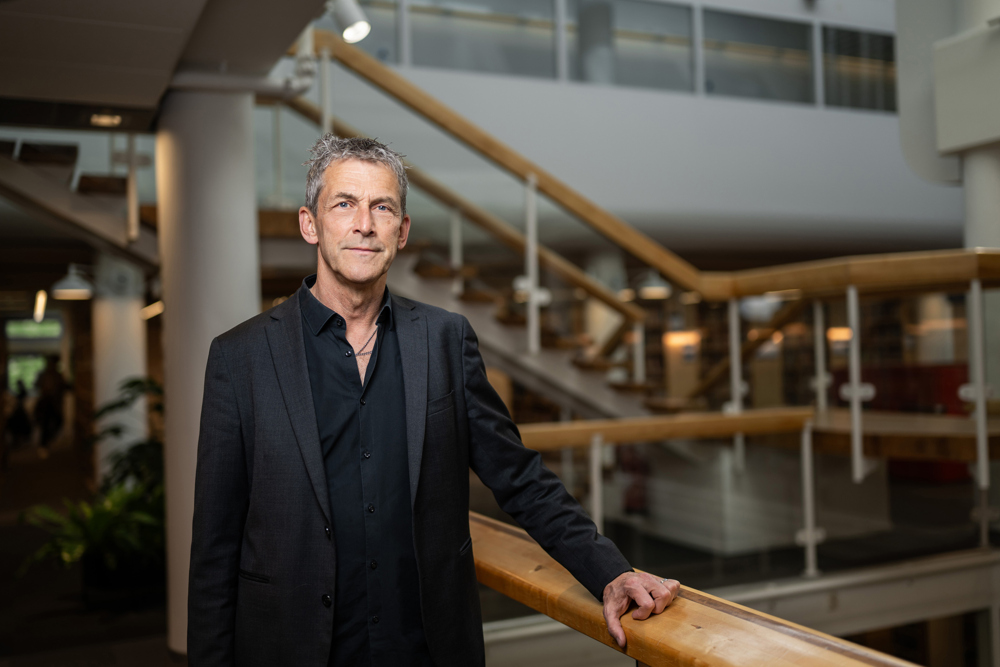
Prof. Jonas Ebbesson. Photo: Johanna Säll / Stockholm University
Prof. Ebbesson (LL.D. Environmental Law) is the Director of Stockholm Environmental Law and Policy Centre, here at Stockholm University and former Dean of the Faculty of Law (2012-2017).
Prof. Ebbesson wants to share his deep commitment and passion for environmental law with international students, with the LL.M. focusing on the transboundary dimensions of environmental law, access to justice and human rights in environmental matters and on law and social-ecological resilience.
With a vast background in the area, he was also for ten years the Chair of the international independent review body, the Compliance Committee, of the UNECE Convention on Access to Information, Public Participation in Decision-making and Access to Justice in Environmental Matters (Aarhus Convention). He has also experience in environmental litigation.
We asked him a few questions about the LL.M. Environmental Law.
Interview with Prof. Ebbesson
What is your background and how did you end up in this particular field of law?
"I have taught international, EU and Swedish environmental law for more than 30 years and I have always been interested in social, societal and political matters. It was clear to me early on that I wanted to work with law for something that I thought was meaningful. For sure, there are many such areas, but one that became increasingly interesting to me was environmental law. It involves both issues on sustainability and justice.
My research has essentially been focused on the transboundary dimensions of environmental law. I have written substantially about legal aspects on public interests, public participation, access to justice and human rights in environmental matters, but also on law in relation to and social-ecological resilience and planetary boundaries."
What are some of the characteristics of the EL LLM which make it particularly beneficial for international lawyers?
"First, the Master Programme in Environmental Law at Stockholm University centres on transboundary dimensions – and there are many such dimensions. These include international law, EU law and also transboundary application of national laws.
Second, the programme provides in-depth studies in four transboundary themes which we think are of particular importance, namely the relation between environmental law and trade and corporate responsibility, climate and energy, human rights and social-ecological resilience."
How do you think LLM candidates can make the most of what is a relatively short programme?
"In previous years, I have seen how important it is that the students develop both individually and as a group during their studies. By sharing experiences and learning from each other throughout the year while studying, they can make the most of the courses, while also enjoying the social relations."
Speaking of social relations and activities: what do you think is the best thing with Stockholm University and with Stockholm as a city?
"Well, despite its relatively modest size, Stockholm is a vibrant and cosmopolitan city. I also appreciate the fact that the city is not only defined by the university. The university itself is equally vibrant and cosmopolitan, and has broad competence in environmental and sustainability research in human sciences, which includes law, as well as natural sciences."
From an admission point of view, any advice on one should go about when drafting their personal statement?
"I don’t think I should give any specific advice on this matter. Each applicant should define their own purpose rather than being influenced by me."
This is fair enough! Now if we look to the candidates who complete the programme; where do you see the alumni of EL work after graduation?
"We have seen students from our programme working in governments and public administrations, in non-governmental organisations, in academia, as counsels in law firms, and in the business sector."
Lastly, any advice for those looking to build a career in Environmental Law, either pre or post LLM?
"I don’t know how much it helps building a career, but in the long run, one needs to feel that one works for a good cause and for something that matters for oneself. For me that means working with something that makes the world a better place; but I think it is for each one to define what that is."
Prof. Ebbesson has done precisely that. He found his calling in environmental law and has built his career around issues that are both intellectually stimulating and of great societal importance. His research spans a wide range of topics, including the responsibility of transnational corporations for environmental and health-related harm, questions of environmental justice, and the relationship between law and social-ecological resilience. Alongside his academic work, he has also contributed to the development and application of environmental law in both national and international contexts.
To learn more about Prof. Ebbesson's research and professional achievements, visit his university profile:
If you are interested in pursuing research and a career in this vital field, where sustainability and justice intersect, we encourage you to apply as one of our new doctoral candidates. More information about the application process is available on the SULaw website.
Last updated: 2026-09-30
Source: Department of Law