


Large gathering of historians of religion in Bucharest
Twelve participants from History of Religions at Stockholm University presented their research at Religions 360° in Bucharest on 20–25 September 2026. The congress was the 22nd conference of the European Association for the Study of Religions (EASR) and a regional conference of the International Association for the History of Religions (IAHR).
The Stockholm participants included academic staff, doctoral students and four master’s students, all of whom presented their own papers. It was particularly encouraging to see the students presenting their ongoing thesis research. Their participation shows how work at master’s level can contribute to international academic discussions and how teaching and research come together in History of Religions.
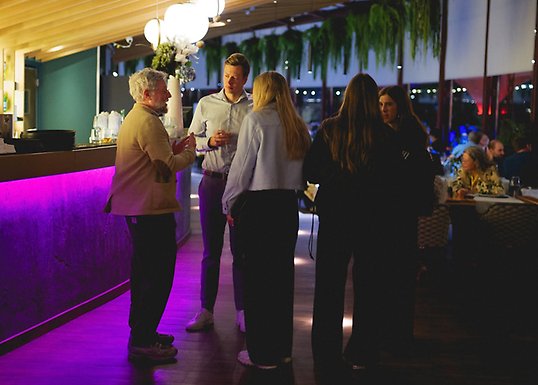
Master students involved in discussion. Photo: Andrei Ivan
Master’s students Elias Södergren, Maja Román, Lars Nilsson and Robin Funck presented research ranging from contemporary religious life in Sweden to ancient ideas about knowledge that brings salvation. Södergren spoke about Swedish converts to Eastern Orthodox Christianity, while Román explored how Swedish Latter-day Saints describe their time as missionaries and its significance for their continued religious involvement. Nilsson presented an ethnographic study of tarot reading in public spaces in Stockholm. Funck examined how gnosis is expressed and communicated in Sethian and Valentinian traditions.
The doctoral students brought further historical and geographical perspectives. Nargiz Mammadli gave a paper on indigenous Tengrist cosmologies from a historical perspective. Isabella Schilcher explored how stories about swords in the Japanese chronicle Kojiki were used to create political myths and legitimise imperial power.
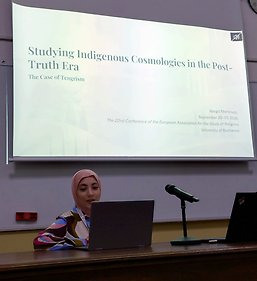
Nargiz Mammadli. Photo: Susanne Olsson
Among the academic staff, Olof Sundqvist discussed the relationship between pre-Christian traditions and Christian innovation in the religious practices and sacred landscapes of medieval Scandinavia. Frederik Wallenstein explored beliefs about trolls in early modern Sweden. Willy Pfändtner discussed religion and philosophical idealism in India and Europe, while Carl Johan Gurt presented research on tradition and innovation in contemporary rituals among the Nuu-chah-nulth on Vancouver Island.
Susanne Olsson organised the panel Islamic Prophetic Relics in Transformation, where she also presented a paper on al-Maqqarī’s defence of the veneration of the Prophet Muhammad’s sandal. The panel explored how Islamic prophetic relics have been interpreted, used and debated in historical and contemporary contexts.
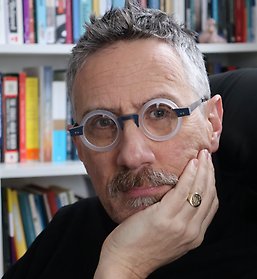
Aaron W. Hughes
Aaron W. Hughes organised the panel Decolonisation and the Study of Religion and presented the paper Whose Decolonialization?. He examined what decolonisation can mean for the study of religion, drawing on examples from Islamic studies and the study of Indigenous religions.
Olsson and Hughes also took part in two roundtable discussions on the history and future of the field. In Women Pioneers in the Study of Religion: A Roundtable Discussion, Olsson joined international colleagues to discuss how women scholars’ contributions can be given greater recognition in histories of the field. Organised by Göran Larsson of the University of Gothenburg, the discussion considered both which scholars should receive attention and how the boundaries of the field shape who is remembered. The work is intended to lead to a publication on women pioneers in the study of religion.
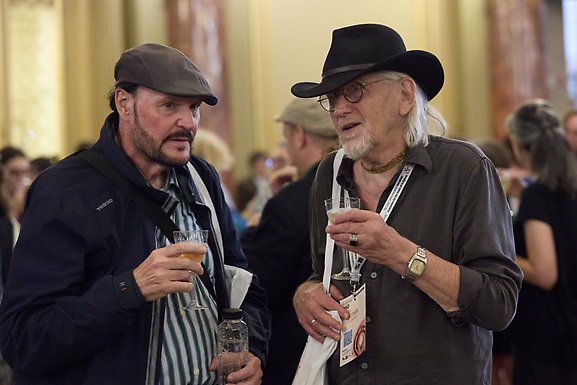
Carl Johan Gurt and Willy Pfändtner. Photo: Mihai Constantineanu
Hughes participated in Critical Religion: Exploring the Revolution, which brought together contributors to the book A Practical Guide to Critical Religion. The discussion focused on how the category of religion has been shaped and used in relation to power, politics and governance, and how examining it critically can open up new research questions.
Last updated: 2026-11-10
Source: Department of Ethnology, History of Religions and Gender Studies