


Why have women owned less than men? New research traces Sweden’s wealth gap across a century
Why do women still own less wealth than men? To answer that question, researchers are looking to the past. A new research project led by Elise Dermineur Reuterswärd at Stockholm University will trace the fortunes of Swedish women and men from 1850 to 1950, revealing how laws, inheritance practices and family structures shaped access to wealth across generations.
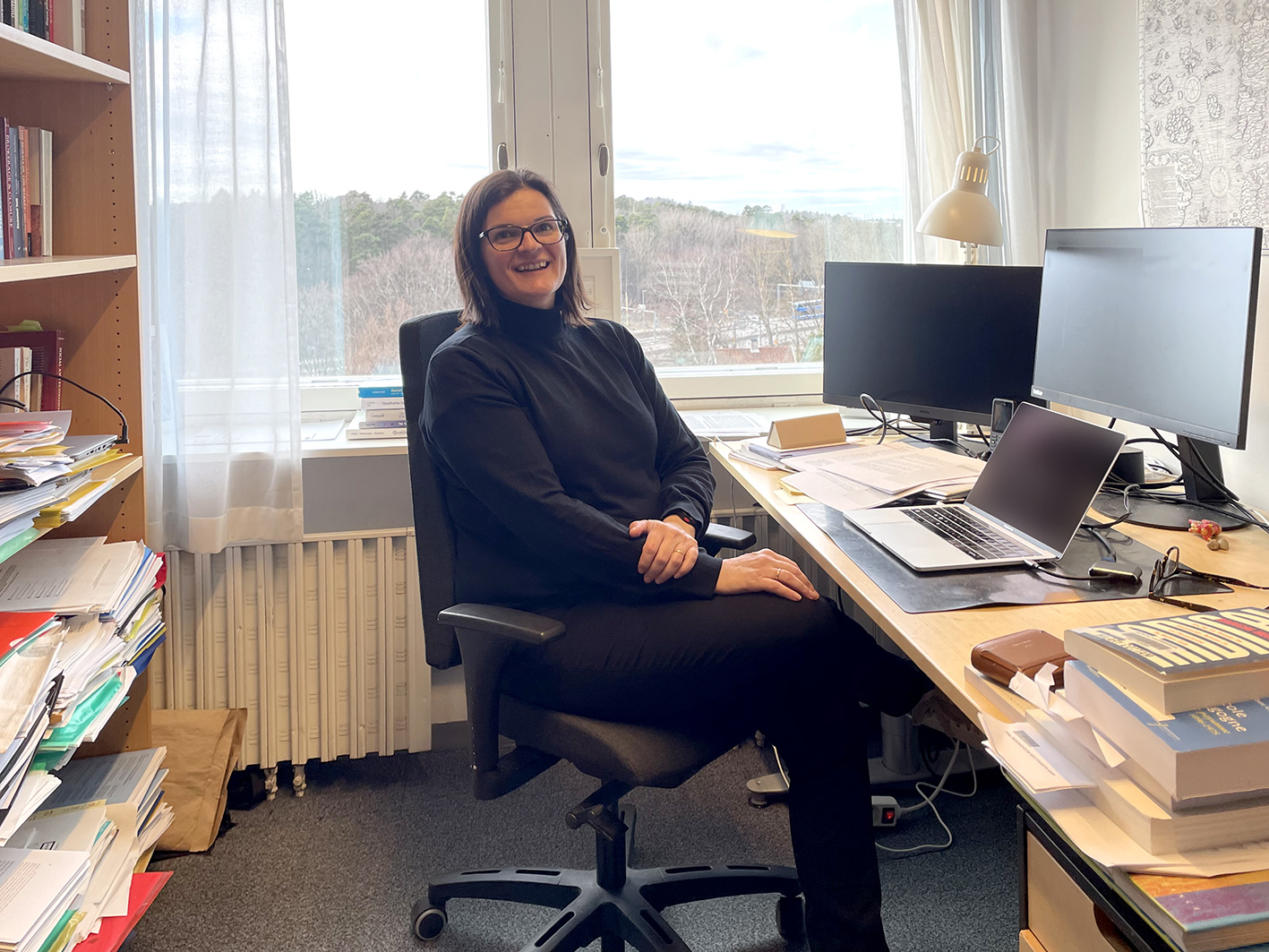
Elise Dermineur Reuterswärd is Associate Professor of Economic History at Stockholm University and the author of Before Banks: The Making of Credit and Debt in Preindustrial France (Cambridge University Press, 2025). Her research has long followed money through people’s lives: who lent it, who borrowed it, and who was left out.
The new project from Elise 'Tracking Gendered Wealth Inequality: Evidence from Sweden, 1850–1950' is financed by The Swedish Research Council (VR) and carried out together with Docent Kristina Lilja of Uppsala University. It turns to a question economic historians have rarely asked: How much did women own compared with men, and why? Drawing on thousands of probate inventories, tax records and wills, the project aims to build the first individual-level picture of the gender wealth gap in Sweden across a full century, from the patriarchal property regime of the mid-nineteenth century to the early welfare state.
Why study women’s wealth, and why now?
Because wealth inequality is also gendered. Women today hold less capital, own fewer valuable assets, and save less for retirement. There are only a few women among the world’s billionaires. Those gaps have a history, and we know surprisingly little about it. Since Piketty, economic historians have mapped the distance between rich and poor, so-called vertical inequality, in great detail. Yet the distance between men and women, horizontal inequality, has been largely overlooked. The main reason is practical: historical wealth was recorded by household, and untangling what a wife owned from what her husband owned is extremely difficult. The studies we have are small, short in time span, and often limited to unmarried women.
How will you actually measure the gap?
By working at the level of the individual. We combine about 8,000 probate inventories, roughly 6,000 tax declarations across six benchmark years, and some 400 wills from thirty families followed over several generations. Each spouse is traced separately and the records are linked, with church registers used to confirm identities. Probates have limits: they overrepresent older people and miss those who owned nothing. The first problem we correct with mortality multipliers. The second we cannot fully correct, which is why the tax registers matter. For the analysis itself, averages mislead, because a handful of very rich individuals can drag a mean in any direction. So we decompose the Gini index and work with percentile ranks. The simple question becomes: where did a typical woman stand in the wealth distribution relative to a typical man, and did her position improve?
What do you expect to find, and why should it matter beyond economic history?
My pilot study of never-married noblewomen in 1850 and 1910 offers a clue. After the legal reforms of the late nineteenth century, their wealth grew, and their financial assets grew fastest of all. The reforms seem to have encouraged women to invest. Yet this was a privileged group, and whether the same held for a seamstress in Södermalm or a widow in Mora is what the project must establish. I also expect the family to matter a great deal. Inheritance customs could favour sons even where the law demanded equality. The project’s wider relevance is simple: women’s pensions, capital income and property ownership still lag behind men’s, even where wages have largely, though not fully, converged. Past experiences may offer food for thought, and a far better grasp of how institutions, families and markets together shaped what women could own.
Last updated: 2026-10-13
Source: Department of Economic History and International Relations