


New NordForsk grant on Nordic security cooperation
Mark Rhinard, Professor in the Department of Economic History and International Relations, has received funding for the project “Resilience or Rupture? The Nordic Security Community in an Age of Antagonistic Threats” (NORDSECURE).
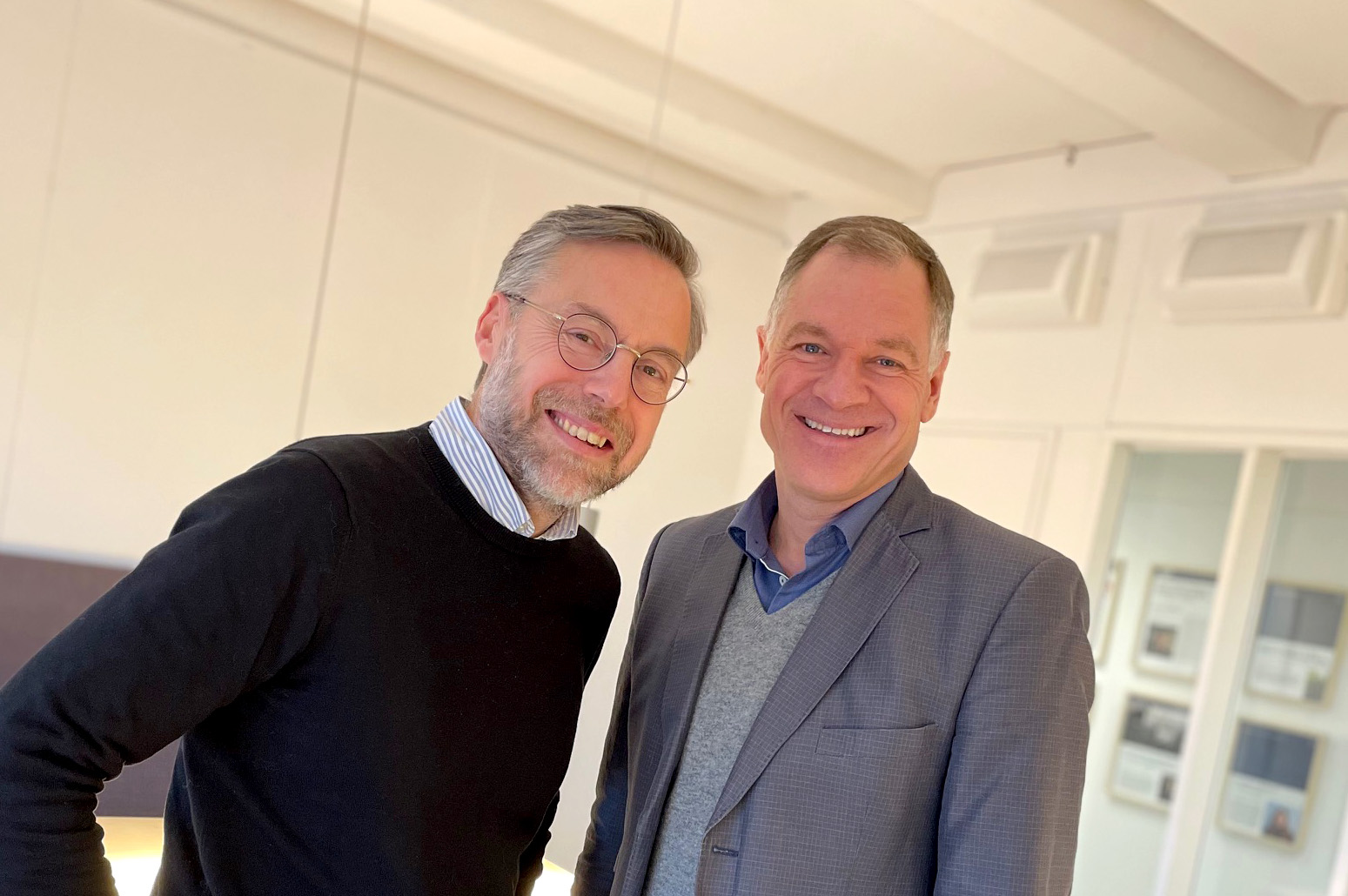
Associate Professor Niklas Bremberg and Professor Mark Rhinard.
The project examines how growing military, infrastructural, and informational threats are reshaping cooperation among the Nordic states. The Co-PI is Associate Professor Niklas Bremberg at SU’s Department of Political Science, with partners at the University of Copenhagen, Tampere University, and the Peace Research Institute Oslo.
What does the project investigate?
The Nordic region has long been seen as a security community -- a group of states bound by trust, shared identity, and dense routines of cooperation. Recent antagonistic threats, however, have placed this model under strain. Russia’s war against Ukraine, undersea infrastructure sabotage, and persistent disinformation highlight vulnerabilities in how Nordic countries perceive threats and coordinate responses.
NORDSECURE examines how these pressures shape both the contours and the coherence of Nordic security cooperation. The project introduces the lens of securitizing communities of practice, focusing on the everyday routines, shared understandings, and professional dispositions through which security is enacted in practice.
Three security domains form the basis for comparison:
• Military threats, including coordination after Finland’s and Sweden’s NATO accession;
• Undersea infrastructure protection, with the Nord Stream sabotage as a pivotal moment;
• Disinformation campaigns, which challenge societal trust and vary in how they are defined and addressed.
These cases allow the project to assess whether Nordic cooperation deepens, adapts, or fragments under pressure.
Why is this important now?
As threats intensify, it becomes essential to understand not only formal cooperation but also the daily practices of the practitioners who enact security on the ground. Their routines often determine whether cooperation succeeds in moments of stress.
By foregrounding these everyday practices, NORDSECURE offers new insights into how regional preparedness, resilience, and trust can be strengthened -- contributing to both academic debates and practical policymaking across the Nordic and Nordic–Baltic region.
Learn more about the project here
---
Last updated: 2026-08-25
Source: Department of Economic History and International Relations