



Information for students with disability study support
The department has a new procedure for applying for support at invigilated written examinations.
Department of Culture and Aesthetics
The department has a new procedure for applying for support at invigilated written examinations.
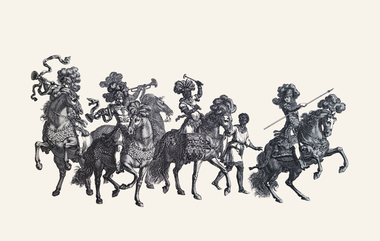
Linnea Ripenberg has written the thesis Racial Play: Representations of Blackness in Court Festivals of the Early Modern Holy Roman Empire and Scandinavia.
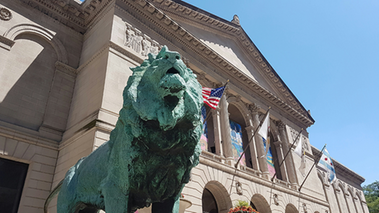
Magdalena Holdar, Associate Professor of Art History and Curating, has been invited as a visiting scholar at the School of the Art Institute of Chicago (SAIC) during the month of February.
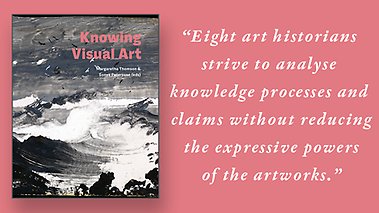
In the anthology Knowing visual art, eight art historians examine how scientific analyses encounter the immediate expressiveness of artworks and how these perspectives together can deepen our experience of art.
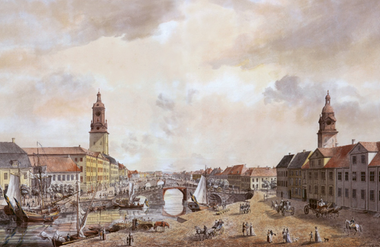
A new anthology critically examines the notion of 'Nordic exceptionalism' from 18th-century accounts to contemporary discourse.
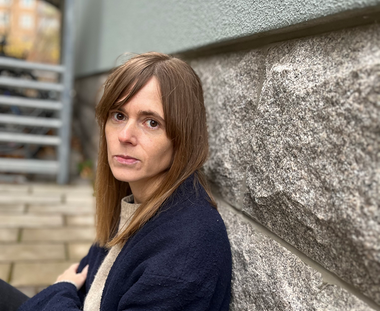
PhD of Literature Hedvig Härnsten has been granted a Research Fellowship from the Stina och Erik Lundberg Foundation.
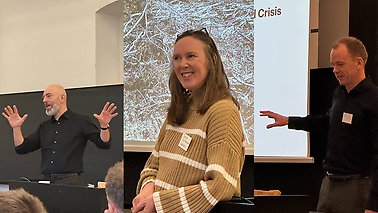
Nike Stolpe Wikström, PhD Student in History of Ideas, recently arranged a cross-institutional and interdisciplinary symposium at KTH.
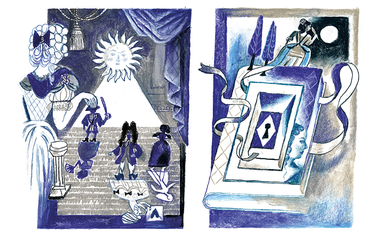
By Sofia Nilsson Warkander: Doubles and Troubles: Dissimulation and Ambiguity in the Writings of Marie-Madeleine de Lafayette and Madame de Villedieu.
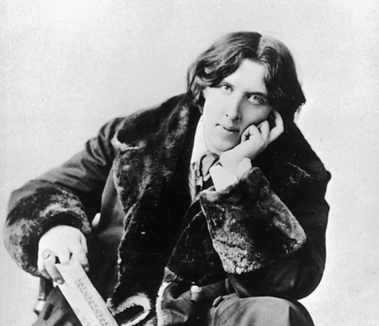
Associate professor of Literature Anna Jörngården Galili contributes to a new anthology published by Oxford University Press.
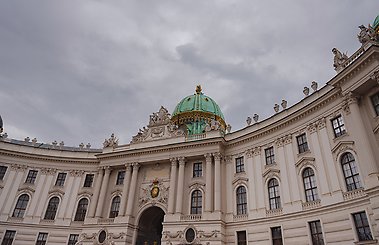
Art historian Tanja Schult presents parts of her forthcoming book You Got me thinking. Monuments as Democratic Artivism (Brill-Böhlau 2026/27) at Bundesdenkmalamt in Vienna 10 December.

A new interdisciplinary research project at Stockholm University, "Beyond Trauma: Futures of Memory and the Memory of Futures," investigates the relationship between memory and the future by integrating perspectives from multiple academic disciplines. The project focuses on analyzing how literary texts and cultural narratives envision the future by engaging with the past. By broadening memory studies beyond its traditionally trauma-oriented and retrospective focus, the project introduces a theoretical framework that emphasizes the possibilities of future memories and memories of the future. The researchers will examine literary works and narratives from various cultural contexts, such as Taiwanese, Ukrainian, African, Caribbean, Slavic, Irish, and Nordic, to analyze how these texts articulate alternative and speculative futures that can impact cultural identities, collective agency, and historical consciousness. The aim is to contribute to a paradigm shift in memory studies that emphasizes futurity and narrative experimentation, while also challenging linear conceptions of time. The research project is led by Professor Irmy Schweiger at the Department of Asian and Middle Eastern Studies. Other project members from Stockholm University include: Professor Victoria Fareld , Department of Culture and Aesthetics, Associate Professor Olena Jansson , Department of Slavic and Baltic Languages, Associate Professor Anna Jörngården Galili , Department of Culture and Aesthetics, Postdoctoral Researcher Alice Sundman , Department of English, Professor Joakim Wrethed , Department of English, and Postdoctoral Researcher Maria Ioana Zirra , Department of English. The project also involves several international researchers, such as: Dr. Richard Crownshaw , Goldsmiths, University of London, Professor Elisabeth Herrmann , University of Warwick, Professor Justyna Tabaszewska , Polish Academy of Sciences, Professor Emerita Andrea Riemenschnitter , University of Zurich, Professor Pieter Vermeulen , KU Leuven, and Professor Jenny Wüstenberg , Nottingham Trent University.