


The data scientists of the future
In the fast development of technology, DSV has, together with the Department of Statistics, developed a master’s programme, aiming to meet the demand for future data scientists.
This programme takes a new approach by combining three subjects: data science, statistics and decision analysis.
Ioanna Miliou, one of the programme coordinators and creators, talks about the inspiration for the courses’ design, its structure and the thoughts behind the programme.
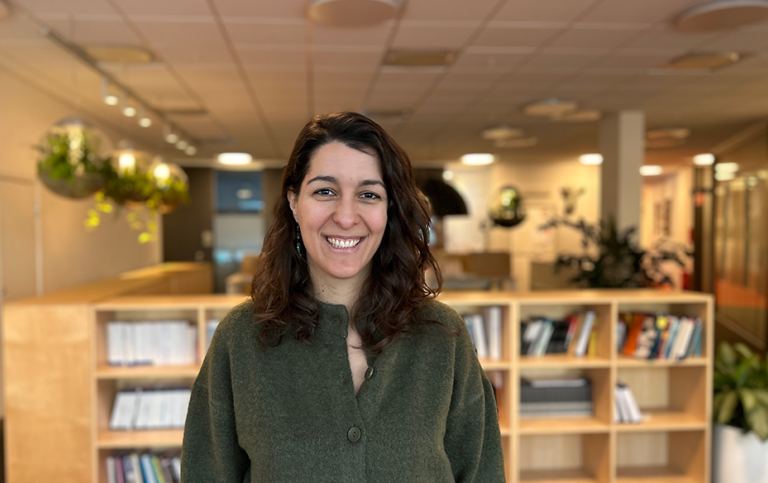
Ioanna Miliou programme coordinator for the master’s Program in data science, statistics and decision analysis at DSV. Photo: Carina Bergholm.
“We want to create the data scientists of the future. And not in the way that it has been done before. A good data scientist needs a robust statistical background. Not necessarily with complex maths, but a solid foundation in statistics. The students also gain knowledge about decision problems and various types of risk analysis and learn how to implement it in a corporate setting”, says Ioanna Miliou.
We want to create the data scientists of the future. And not in the way that it has been done before
The collaboration between the departments emerged from a recognition of gaps in the previous master’s programme in data science and decision analysis.
“Statistics is the base of machine learning and data mining algorithms today. Therefore, it is great that we create data scientists – or if you speak more generally, computer scientists – who now have this part incorporated in their master’s degree.”
Course structure
The programme's structure consists of the three pillars – data science, statistics and decision analysis – with 33 percent each of the curriculum.
“We have designed the content of the courses to cross over and bring one field inside the other. There is a specialist course leader from each field for each course, but we are creating a flow between the courses.”
We are creating a flow between the courses
Practical experience
Most of the courses include both traditional-style lectures and lab work, while some include projects as well.
“Almost 50 percent consists of practical testing to implement the things the students have learned in class. All courses in data science have got a programming part. Everything they learn in class, they learn to implement in coding. We discuss the theoretical part and, sometimes, the maths behind it. The students then go to the labs and “make it work” with real data. In data science we use Python and in statistics we use R. They are very similar languages. It is not a hard transition from one language to the other. They are both very intuitive programming languages.”
Accessibility for all backgrounds
The programme is accessible for students with only a little bit of programming skills. The courses are designed as a continuum, gradually increasing in difficulty.
“We start with a course in foundations of data science, with easy programming assignments and study the theory at a lower level. After that, students are prepared for the machine learning course, where the students see the same type of algorithms and assignments but more complicated. In the spring, we go into deep learning with the most complex algorithms. Students are able to follow the courses building on each other,” says Ioanna Miliou.
Text: Carina Bergholm
Last updated: 2026-11-18
Source: Department of Computer and Systems Sciences