


Teachers’ Pedagogical Knowledge in School-Age Educare
A new dissertation by doctoral candidate Anneli Hippinen Ahlgren from the Department of Child and Youth Studies, highlights how teachers in Sweden’s school-age educare (fritidshem) navigate the evolving expectations of teaching in an educational setting traditionally grounded in play, social interaction, and child-led activities. The research, conducted offers fresh insights into what teaching means in environments where children’s influence and curriculum goals intersect.
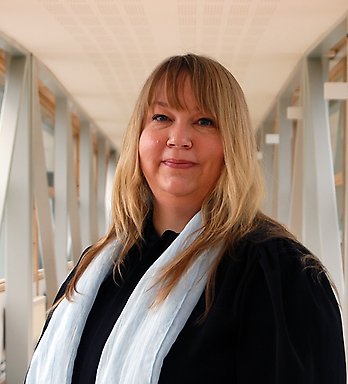
Anneli Hippinen Ahlgren.
Since the term teaching was formally introduced into the fritidshem curriculum in 2016, educators and researchers have debated how it should be understood. Hippinen Ahlgren’s dissertation explores how teachers interpret the concept and how their daily work reflects a blend of planned instruction, spontaneous learning opportunities, and child-driven engagement
Three Interwoven Forms of Teaching
The dissertation identifies three forms of teaching that shape practice within fritidshem:
- Child-led teaching, where children’s ideas and initiatives guide the learning process, with teachers providing support in the background.
- Situation-led teaching, in which teachers respond to emerging questions, interests, or social moments in real time.
- Goal-led teaching, guided by curriculum objectives and teacher planning.
These three forms often overlap, requiring teachers to move fluidly between structured planning and responsive, participatory methods. According to Hippinen Ahlgren, this interplay is a defining feature of teaching in school-age educare.
A New Application of Pedagogical Content Knowledge
To analyze teachers’ work, Hippinen Ahlgren draws on the theoretical framework Pedagogical Content Knowledge (PCK)—a model traditionally applied to subject-based school teaching. The study adapts PCK to the unique context of fritidshem, where teachers’ knowledge spans a wide range of domains, from mathematics and science to social skills, meaningful leisure activities, and play. [avhandlingar.se]
Her findings show that teachers’ pedagogical decisions are shaped by their ability to integrate:
- subject knowledge,
- pedagogical knowledge,
- contextual understanding,
- and curriculum awareness.
Through observations and analysis, the research demonstrates how these forms of knowledge transform into teaching actions, including exploratory activities, demonstrations, dialogue-based interactions, and co-created learning experiences.
Highlighting the Complexity of Fritidshem Teaching
The dissertation underscores that teaching in fritidshem is both complex and distinctive. Teachers must juggle multiple parallel teaching situations, improvise in response to children’s intentions, and create space for both structure and spontaneity. The study also emphasizes how teachers enable children’s agency and participation while navigating curriculum requirements.
By offering new terminology and analytical tools, the research contributes to a deeper understanding of a professional field that has long been under-examined. Hippinen Ahlgren’s work clarifies the pedagogical expertise required in school-age educare and provides a framework for discussing and developing teaching in these settings.
Last updated: 2025-12-22
Source: Department of Child and Youth Studies