


Eunah Kim on the South Korean Nobel laureate Han Kang
On 10 October 2024, South Korean author Han Kang was awarded the Nobel Prize in Literature. Eunah Kim, Lecturer and Researcher in Korean Language and Culture at the Department of Asian and Middle Eastern Studies, talks about the laureate.

South Korean author Han Kang (b. 1970) was awarded the Nobel Prize in Literature in 2024. Photo: Paik Dahulm/Natur & Kultur
Han Kang is the first writer from South Korea to receive the prize. She started writing poetry and made her international breakthrough as a novelist in 2007 with The Vegetarian. She is a writer who can be clearly placed in the context of literary history, where she can be compared to the previous generation of writers in South Korea.
“In the 1970s and 1980s, Korean literature was political. It was a turbulent time and writers were expected to take moral responsibility and write about oppression. The literature published was very political and didactic. But with democratisation, literature has moved away from the big political stories. It changed its focus to the little person. There were also many female authors on the literary scene, which was previously dominated by male authors,” Eunah Kim told the Swedish science magazine Forskning & Framsteg.
Han Kang made her debut in the early 1990s and represents the new writers who began to challenge the boundaries of what you can write.
“What is special about Han Kang is that although she writes about Korea's painful history, she does so in a different way. The focus is not on the big historical events, but on the emotional. Even though she is politically aware, the focus is on the individual and what happens in people's inner lives,” Kim said.
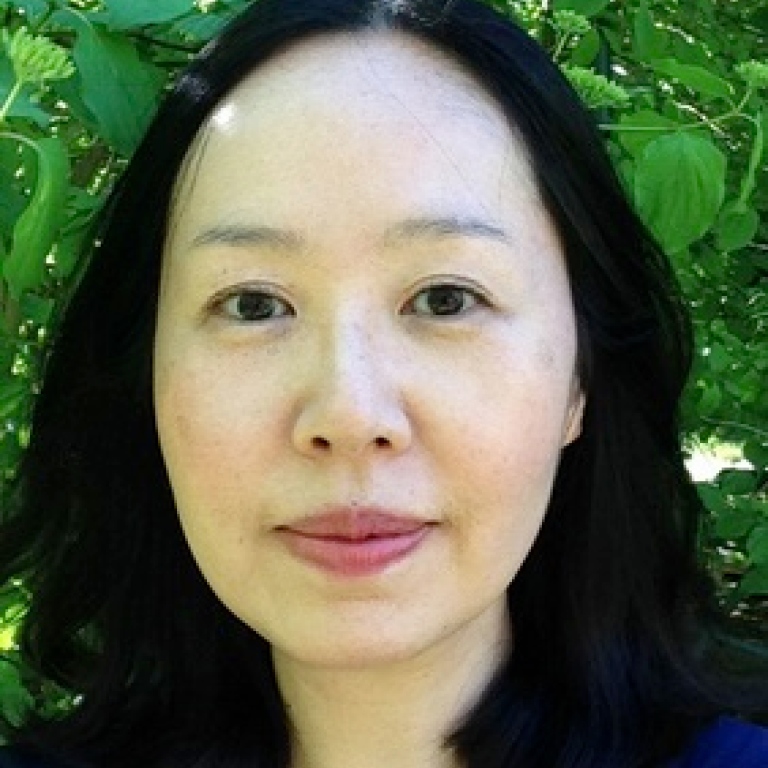
Eunah Kim, researcher and lecturer in Korean Language and Culture at Stockholm University.
Eunah Kim wrote her PhD thesis on Pak Wansô (1931-2011), one of South Korea's leading contemporary women writers. When Pak made her debut in the 1970s, she was one of very few women writers on the male-dominated literary scene. As a woman, belonging to a group that has been marginalised and excluded from public discourse, Pak had to find ways to make her voice heard and to make women's experiences meaningful in a country undergoing profound social, economic and cultural changes. Han Kang belongs to the new generation of experimental writers in South Korea who followed in her footsteps.
“Han Kang's language is relatively simple, spare but poetic. She often depicts violent events, but she does so in a linguistically stripped-down way that makes the contrast very poignant.”
Read more:
Kim, E. (2020). Communicating Female Voicelessness : A Feminist-Narratological Study of Pak Wansô’s Short Stories from the 1970s (PhD dissertation, Department of Asian and Middle Eastern Studies, Stockholm University).
Courses and Programmes in Korean Language and Culture at Stockholm University
Last updated: 2024-10-15
Source: Department of Asian and Middle Eastern Studies