


The Green Zone seminar series: On location book launch - Heritage and the Politics of Invasive Alien Species
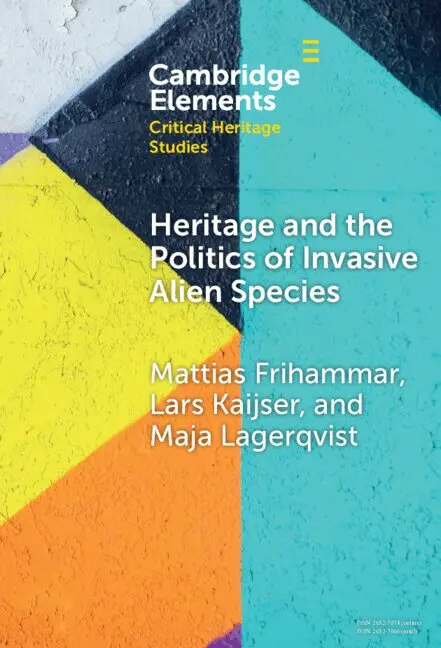
Heritage and the Politics of Invasive Alien Species (Cambridge University) examines invasive alien species through critical heritage studies. By using Swedish examples, it shows how species management is shaped by memory, tradition, and belonging, challenging purely ecological views of conservation. The presenters at this seminar are Lars Kaijser, Mattias Frihammar and Maja Lagerqvist.
Abstract
Heritage and the Politics of Invasive Alien Species. Affective Alliances and Memory Work (Cambridge University Elements) examines the politics of invasive alien species (IAS) through critical heritage studies, showing how species management intersects with cultural values, identity, and belonging. Using two Swedish case studies, the Garden Lupin and the Signal Crayfish, it traces how environmental and heritage discourses become entangled in conservation and tradition. IAS management is framed as “heritage work,” shaped by emotional attachments, historical narratives, and affective alliances. By treating IAS as cultural phenomena as well as ecological threats, the volume challenges dominant ecological paradigms and stresses the socio-political dimensions of conservation. It argues that notions of “native” and “non-native” are shaped by memory, tradition, and temporality, often producing conflicting interpretations of landscape and heritage. This interdisciplinary approach offers new insights into the cultural dynamics underlying environmental governance in the Anthropocene.
Speaker bios
Mattias Frihammar, Associate Professor in Ethnology at Stockholm University, is interested in how the past is put to work in the present, and how heritage is made, remade and sometimes unmade. His research has taken him from Cold War bunkers and military museums to garden plants and invasive species, exploring how ordinary things become matters of national identity, political concern and strong emotions.
Lars Kaijser, Professor in ethnology at Stockholm University. He works in the field of environmental humanities, with an interest in public aquariums, natural history museums, and invasive alien species, and has previously studied historizations within popular music. Working in an ethnographic tradition, he frequently explores how knowledge, experiences and goods are distributed, and how these processes also carries cultural ideas and assumptions.
Maja Lagerqvist is a senior lecturer and Associate Professor at the Department of Human Geography, Uppsala University. A historical geographer, she is interested in how places and landscapes are constructed, transformed and represented over time; the interplay of materiality and immateriality; thorny heritage issues; and how societies and actors deal with flora and fauna deemed alien and invasive (and other natures) with hands, words and thoughts.
Last updated: 2026-11-02
Source: Områdeskansliet för humanvetenskap