


The Green Zone seminar series: Antarktis, film – poetry and performance
This afternoon will invite you to think of invasive species, animal and human cultures, and Anthropocene futures through poetry, research and (some) audiovisual arts. We will talk about animal cultures, dark umwelts and hegemonic values in protection policies, and how Antarctica helps us to understand the political present – and futures. Kati Lindström is the presenter.
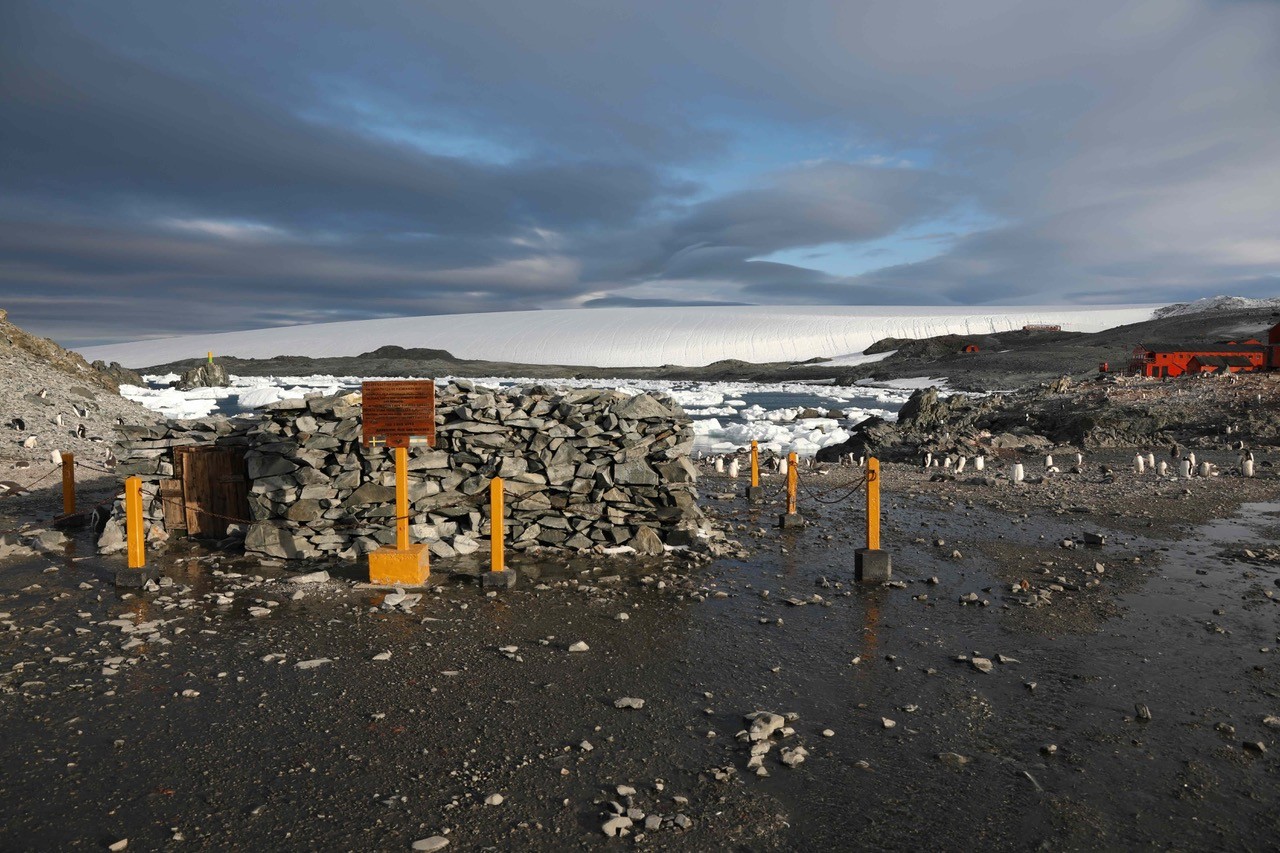
Esperanza Bay, Antarctica. Photo: Kati Lindström, 2020.
Nature has no blank slate: The (empty) promise of protection on the Anthropocene planet
Protecting cultural and natural heritage is premised on a temporal conundrum: it wants to freeze forever something that is but a snapshot on the evolutionary time scales of humans and other species alike, yet is inevitably doomed to fail, since the matter is never stable. The heritage project is as time-blind as it is hegemonic: both nature conservation and cultural heritage seek to make eternal something that is valuable for the powerful core right now, although the power is even less stable than matter. In the attempt to streamline, institutionalise and preserve, little attention is paid to the meaningful worlds of other humans and other species, particularly those whose species-specific life-worlds are “dark”, that is, inaccessible to humans. Weaving poetry and research, and even some moving images, we will look at how invasive species and the blank slate of Antarctica let us understand the empty promise of protection in the Anthropocene futures of this planet. What and whose futures are we planning for?
Speaker bio
Kati Lindström is a docent in the history of science, technology, and the environment, with a specialisation in environmental humanities and the uses of history at the KTH Royal Institute of Technology. Her work explores how geopolitics, cultural stereotypes, and personal identities influence decisions about the protection and deprotection of cultural and natural heritage in Antarctica, Japan, and Estonia. She holds several polar-related commissions of trust, but sometimes simply writes poems.
Last updated: 2026-10-13
Source: Områdeskansliet för humanvetenskap