


A word from the Dean, September 2026
Lena Mäler writes about research infrastructure and the conditions that enable research, as well as the recently established Research Infrastructure Council (RFF).
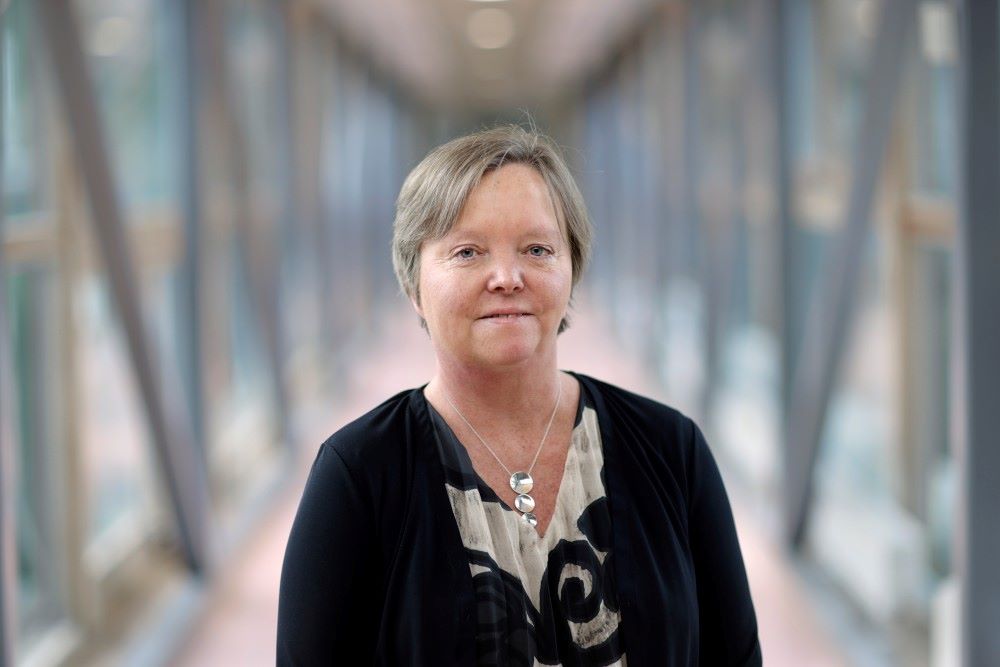
Lena Mäler. Foto: Sören Andersson.
What is research infrastructure?
Defining what constitutes research infrastructure is not straightforward. The answer varies depending on the type of research in question and may differ considerably across the University, including within our own Faculty. For many researchers, computing capacity represents a critical component of research infrastructure, while others depend on specialised instruments for measurements and analyses. Dedicated laboratory environments, research vessels, and specific sites for field studies are among the many other resources that can also be regarded as research infrastructure. What these infrastructures have in common is that they require a substantial share of the University's resources.
This makes effective management, both operationally and financially, of paramount importance. Consequently, research infrastructure has been the subject of extensive discussion across the University over the past year. These discussions have been prompted in part by recent major funding initiatives, such as the Strategic Research Areas (SRAs or SFOs) and the Excellence Clusters for Breakthrough Technologies. At the same time, discussions concerning the future management and organisation of existing research infrastructure at Stockholm University have also played an important role. To ensure continued access to appropriate research infrastructure, the University must assume some form of overarching responsibility for its provision, development, and long-term sustainability.
What is happening at the University?
As is well known, the Research Infrastructure Council (RFF) has been established. The Council is chaired by the President's Senior adviser for Infrastructure, Henrik Cederquist. During its first year, the Council has worked intensively, undertaking a substantial effort to map and identify the research infrastructures that currently exist across the University. It has also developed proposals for how these infrastructures should be managed and governed. Initially, this mapping exercise focused on national research infrastructures supported by the Swedish Research Council (VR). Through the President's Senior adviser, the RFF is now working to support those infrastructures that will be given the opportunity to apply for funding under the forthcoming Research Infrastructure (RFI) call.
New regulations governing the University's co-funding of such infrastructures have recently been adopted by the President. These regulations define a shared responsibility for co-funding between the central University administration, the faculties, and the departments. In my view, this development is highly welcome. At the same time, I would like to emphasise the importance of maintaining a degree of co-funding at the departmental level. Without a clear commitment from the departments, it is difficult to argue that an infrastructure is genuinely important to the University's activities and operations. New guidelines for the management of large-scale local infrastructure, referred to as Strategic Stockholm University Infrastructure, have also been developed, representing another significant step in the right direction.
The RFF has additionally been tasked with investigating a long-term and sustainable approach to the management of the University's field stations. Most of these are located within our Faculty and have traditionally been administered and managed by individual departments. This arrangement is becoming increasingly unsustainable due to rising costs, including those associated with facilities, as well as a growing administrative burden. For this reason, the Faculty independently initiated an external review of one of the stations, Tovetorp Research Station in Södermanland. The review is expected to be completed in the near future and is welcomed by the Faculty. It will also provide valuable input to the ongoing work of the RFF. It is hoped that the Council's investigation will result in proposals that contribute to a more sustainable long-term model for managing those field stations that the Faculty and the University consider to be of strategic importance and broad institutional value.
External investments
By the time this text is published, we will have inaugurated one of the four research infrastructures made possible through major investments by WISE (Wallenberg Initiative Materials Science for Sustainability), namely CircuLab. CircuLab is a research infrastructure designed to support the entire research process involved in developing new sustainable materials, from synthesis through to the practical application of the material. In total, Stockholm University was awarded approximately SEK 140 million for four infrastructure platforms through the WISE initiative, representing a significant investment by any measure. The importance of private initiatives cannot be overstated, and the strategic research programmes funded by the Knut and Alice Wallenberg Foundation (KAW) have enabled substantial investments in research infrastructure.
In addition to WISE, SciLifeLab provides another excellent example. The initiative was an early pioneer in making major investments in bioinformatics and, subsequently, in cryo-electron microscopy for structural biology research. These infrastructures would not have been possible without external funding. Two further examples of the important role played by private funders are the research vessel Electra, which was made possible through a major donation from the Erling-Persson Family Foundation, and the icebreaker Oden, where external funding has enabled the development of research infrastructure, including advanced sonar systems and other scientific equipment. In the case of Oden, securing funding for a successor vessel is now of paramount importance. Launched in 1989, the vessel is approaching the end of both its technical and economic lifespan. A new research icebreaker is therefore essential if Sweden is to maintain its internationally strong position in polar research and continue to be an attractive partner in international research collaborations.
There is, therefore, no single model for supporting and providing access to research infrastructure. Instead, a range of actors share responsibility with the University for ensuring sustainable long-term planning and development. In this context, Stockholm University's newly established Research Infrastructure Council (RFF) represents a particularly important component of the overall effort.
Lena
Further reading
Read about Senior advisors to the President: Senior advisors to the president with different areas of responsibility
Read about CircuLab: WISE Platforms - CircuLab
Last updated: 2026-09-30
Source: Office of Science